Concrete Repair in Racine, WI — Residential & Commercial Concrete Repair Contractors
Crack repair, surface repair and panel replacement across Racine, Kenosha, Milwaukee and Waukesha Counties. The first job is telling you which cracks matter and which ones do not.
Concrete Repair in Racine, WI
Racine Premier Concrete is your local resource for concrete repair, crack repair and surface restoration across Racine, Kenosha, Milwaukee and Waukesha Counties. We work with experienced concrete contractors who will tell you when a slab is worth repairing and when repairing it is money spent twice.
Most people searching for concrete repair do not yet know whether they need a repair or a replacement, and that is the correct place to start. Concrete cracks for several unrelated reasons, and the reasons have completely different prices attached. A slab shrinks as it cures and cracks from that shrinkage, which is cosmetic and normal. A slab cracks because the base under it moved, which is structural and will keep moving. A surface flakes and pits because de-icing salt drove freeze-thaw cycles through the top layer, which is a surface failure over concrete that may be perfectly sound underneath. Those are three different problems that all present as damaged concrete.
The diagnostic that sorts most of them takes about ten seconds. Run a hand across the crack. If both sides are in the same plane, the slab has cracked but has not moved, and sealing it to keep water and salt out of the base is usually the whole job. If one side sits higher than the other, the ground beneath moved, and no amount of filler changes that. This is why an honest concrete repair estimate names the cause rather than listing products. On the older streets around Washington Avenue and Douglas Avenue, where a lot of flatwork is decades old, the cause is usually a mix of salt exposure at the surface and a base that was never rebuilt when the last repair went in.
What’s Included in a Racine Concrete Repair Quote
- A walk-through that identifies each area of damage and names its likely cause, not just its location
- A stated repair-or-replace recommendation per area, with the reasoning, rather than a single number for the whole property
- Crack routing and sealing with a flexible sealant where the crack is stable and the goal is keeping water and salt out
- Epoxy or polyurethane injection where the situation and the crack type genuinely call for it
- Partial-depth patching of spalled edges, broken corners and areas where surface material has come away
- Removal of unsound concrete back to solid material before any patch is placed, since patches bonded to loose concrete fail
- Full-depth panel replacement where a section has cracked through, settled or offset
- Base repair under any panel being replaced, because the panel usually failed for a reason under it
- Joint cleaning and resealing, which is the maintenance item most often skipped on otherwise sound flatwork
- Surface repair mortars or a bonded overlay where scaling is the problem and the slab beneath is sound
- Honest identification of areas that need nothing, so the scope is what it should be rather than what fits the truck
- Cleanup and haul-off of all removed material
Concrete Repair Services in Racine, WI
Cracked Concrete Repair
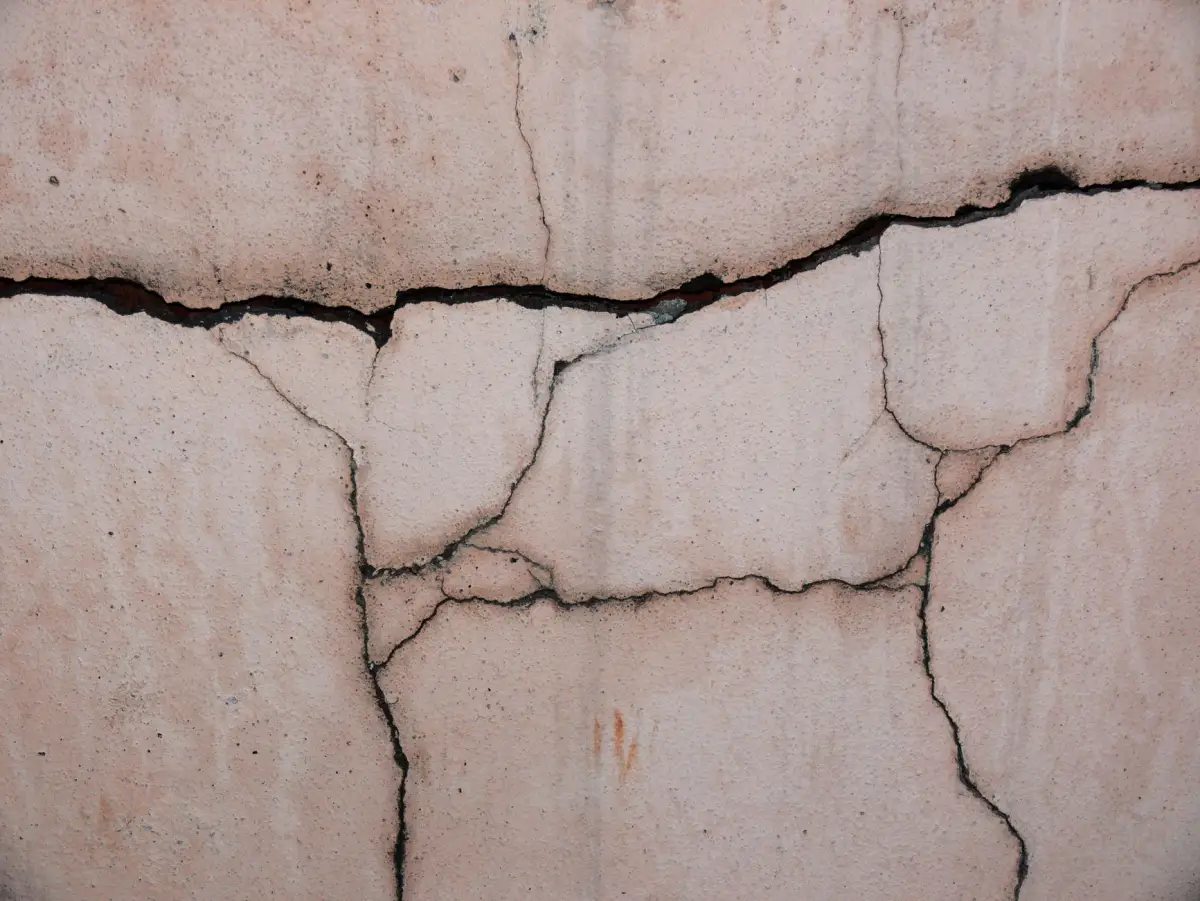
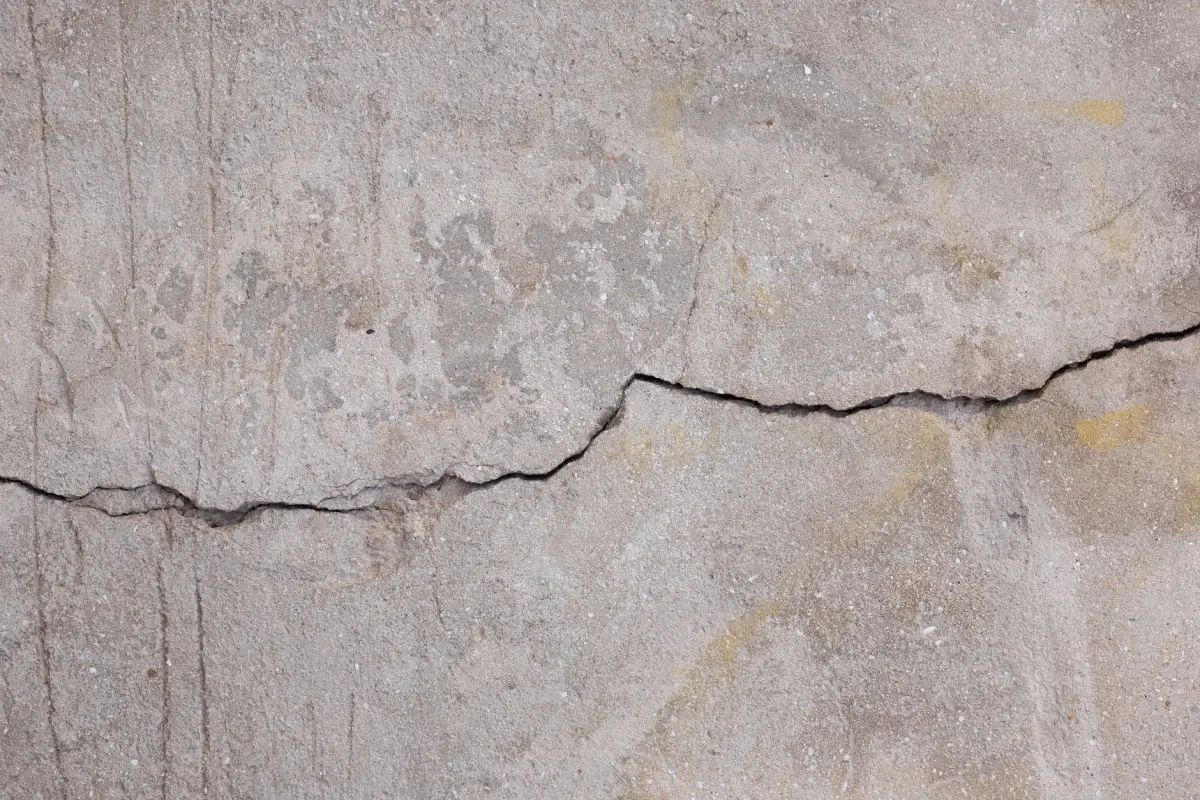
Cracks get repaired according to what caused them and whether they are still moving. A stable shrinkage crack, flat across its width, is routed out to give the sealant a proper reservoir and filled with a flexible sealant, which keeps water and de-icing chemicals from reaching the base and freezing there. That is a genuine repair, not a cosmetic one, because water in the base is what turns a harmless crack into a settled panel. Epoxy injection bonds a crack structurally and is appropriate only where the crack is not going to move again, since cured epoxy is rigid and a moving crack will simply re-crack beside it. Polyurethane injection stays flexible and is used where water intrusion is the problem. A crack with a vertical offset is not a candidate for any of these, because the slab is telling you the ground moved.
Concrete Driveway Repair
Driveways carry vehicle loads, so the repair decision leans harder on structure than it does on flatwork nobody drives on. Sealing stable cracks and resealing joints is worthwhile maintenance on a sound driveway and meaningfully extends its life, particularly at the apron where meltwater and street salt collect. Spalled edges and broken corners can be patched, though patches on a driveway are visible permanently and sit in the most abused part of the surface. What does not respond to repair is a driveway that has settled at the apron, cracked into pieces that move independently, or developed offsets you feel through the steering wheel. Those are base failures under a slab carrying vehicles, and the honest answer is replacement of the affected sections or of the driveway, depending on how much of it has gone.
Concrete Patio Repair
Patios are the best repair candidates on most properties, because they carry no vehicle loads and because their most common failures are cosmetic or drainage-related rather than structural. A scaled patio surface over a sound slab is a resurfacing candidate. A settled corner that now drains toward the house can sometimes be lifted back into plane rather than replaced. Cracks that are stable get sealed, and on a patio the sealant color is worth choosing deliberately, since the repair is at eye level while people sit around it. The failure mode that is not repairable is a patio that has broken into sections moving independently, usually because it was poured over topsoil or fill that was never compacted. That slab is doing what its base tells it to, and a new surface on the same base does the same thing.
Concrete Sidewalk & Walkway Repair
Sidewalk repair is driven by trip hazard rather than appearance, and the repair options are correspondingly specific. A modest vertical offset between panels can be ground down to a bevel, which removes the hazard in one visit at the lowest cost and leaves a visible ground patch. A panel that has settled without breaking can sometimes be lifted back into plane. A panel that is cracked into pieces, or one the municipality has ordered replaced, comes out and gets replaced full depth. Because walks in the terrace sit in the public right-of-way, the repair method may not be entirely up to the property owner, and municipalities sometimes specify replacement where a homeowner would prefer grinding. That is worth confirming before paying for a repair the city will later reject.
Damaged & Deteriorating Concrete Repair
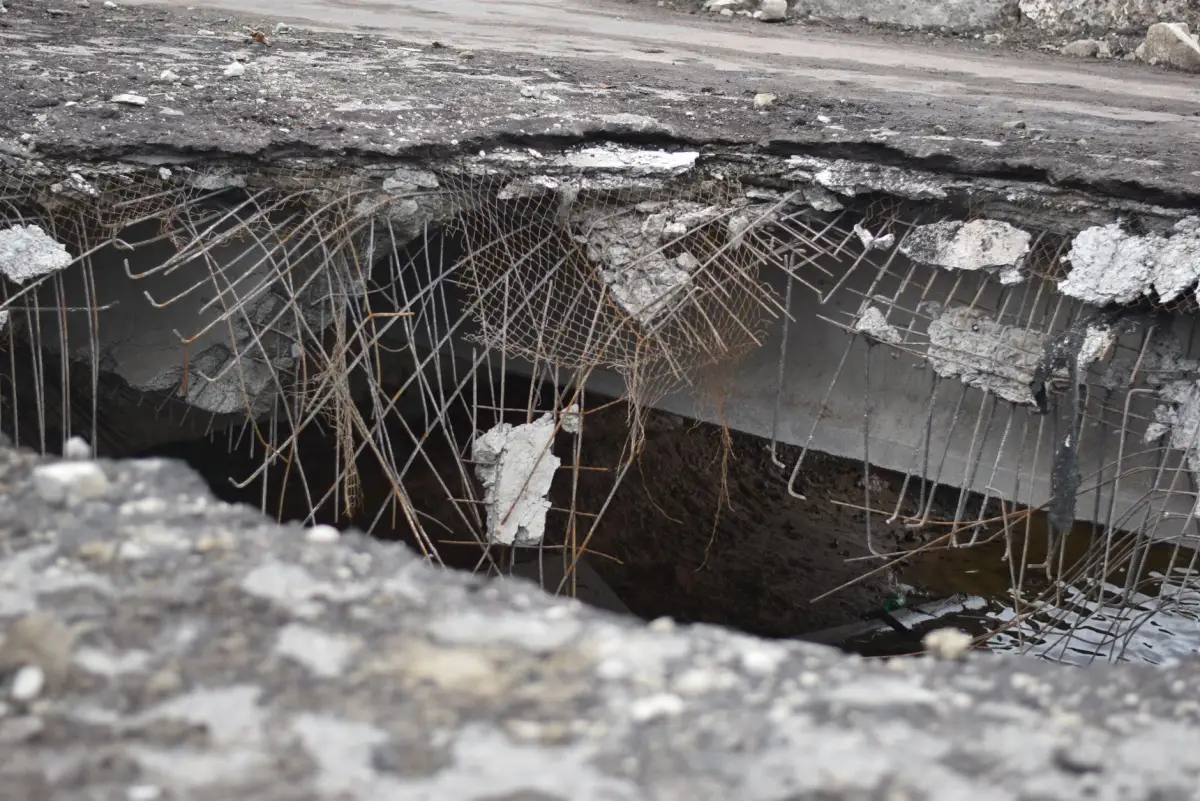
This covers the concrete that is failing at the material level rather than at a crack. Scaling and pitting are surface losses driven by de-icing salt and freeze-thaw cycling, and where the slab beneath is sound they are addressed with a surface repair mortar or a bonded overlay after the loose material is removed. Spalling over reinforcing steel is a different and more serious situation: chlorides reach the steel, the steel corrodes, corrosion products occupy more volume than the original metal, and the expansion pushes the concrete cover off from the inside. Repairing that means removing concrete back past the steel, cleaning or replacing the bar, and patching with a repair mortar, because covering rusting steel traps the mechanism that caused the damage and it continues underneath.
When Concrete Repair Is Worth It, and When Replacement Is Cheaper
Repair Wins on Surface Problems
Scaling, pitting, spalled edges, broken corners and stable cracks are surface and material problems on concrete that is structurally fine. Repairing them costs a fraction of replacement and is the right call. A contractor who recommends demolition for a scaled but sound slab is selling the wrong thing.
Replacement Wins on Movement
Vertical offsets, settled panels, slabs that rock underfoot, and cracks that keep widening are the ground reporting itself through the concrete. The base is the problem, and reaching the base means removing the slab. Every repair applied over active movement is temporary by definition.
The Arithmetic Point
Repairs cost less per square foot but come back. Somewhere around the point where repairs cover a large share of the surface, or where the same area has been repaired before, the accumulated cost passes replacement and keeps going. When more than a third of a driveway needs work, replacement usually deserves a serious look.
Appearance Is a Real Factor
Concrete patches do not match, and they never will. On a back service walk that does not matter. On a front approach or a patio people sit on, a technically successful repair can still be the wrong answer, and that is a legitimate reason to replace rather than repair.
Signs You Need Concrete Repair
- A crack with one side sitting higher than the other, which is movement rather than shrinkage
- Cracks that have visibly widened over the last few seasons
- Surface flaking, pitting or a sandy texture underfoot, particularly on driveways, walks and garage floors
- Broken corners, spalled edges or areas where the surface has come away in sheets
- Rust staining at a crack, or reinforcing steel visible in a spalled area
- Joints that have lost their sealant and now hold water, debris and weeds
- Water standing where it used to drain, or draining toward a building rather than away from it
- Previous patches that have failed, cracked at their edges or come loose
- A hollow sound when a slab area is tapped, which indicates delamination or a void underneath
How Concrete Repair Works
- 1
Diagnosis and Cause, Not Just Damage
Every repair decision follows from why the concrete failed, so the assessment looks for cause rather than cataloguing symptoms. Cracks are checked for vertical offset, which separates movement from shrinkage in seconds. Surfaces are sounded for delamination, since concrete that rings hollow has separated internally even when it looks intact. Drainage is traced, because a downspout discharging onto a slab or a grade that pushes water under it is frequently the whole story. Age and history matter too: a slab that has been patched before, in the same place, is telling you the earlier repair addressed the surface and not the cause. The output of this step is a per-area recommendation with reasoning attached, which is what lets an owner decide where to spend and where to wait rather than accepting a single number for everything.
- 2
Removing Unsound Material
No repair bonds to concrete that is already failing, so preparation is most of the work and most of what separates a repair that lasts from one that pops loose in two winters. Deteriorated concrete is removed back to solid material, usually further than the visible damage extends, because delamination reaches beyond what shows at the surface. Edges of a patch area are saw-cut to a clean vertical face rather than feathered to nothing, since a thin feathered edge has no strength and will break away first. Cracks being sealed are routed out to create a proper reservoir for the sealant instead of having material smeared into a tight line. Where reinforcing steel is exposed and corroding, concrete is removed behind the bar so the steel can be cleaned or replaced, rather than patching over rust and sealing the problem inside.
- 3
Repair, Injection or Replacement
With the area prepared, the method matches the diagnosis. Stable cracks are filled with a flexible sealant that can accommodate the small seasonal movement every exterior slab has. Cracks needing structural continuity, and only those that will not move again, are epoxy injected. Water-active cracks are injected with polyurethane, which stays flexible and reacts with moisture. Spalled and scaled areas are patched with repair mortars appropriate to the depth and exposure, bonded to properly prepared substrate. Areas that failed structurally get removed full depth, at existing joints where they exist, and here the base underneath is repaired before new concrete goes in, because a panel replaced over the same failed base repeats the failure. Joint sealant is renewed as part of any repair scope, since open joints are how water reaches the base in the first place.
- 4
Curing, Sealing and What Happens Next
Repair materials cure on their own schedules, and some are considerably more sensitive to temperature and moisture than ready-mixed concrete is, so the timeline for returning a surface to service depends on what was used. Once repairs have cured, joints are sealed and, where appropriate, a penetrating sealer is applied to reduce how much chloride the surface absorbs going forward. The last part of the job is honest expectation setting. Patches are visible and will stay visible. A sealed crack is a maintenance item that will need attention again in future years. A repair applied to a slab that is nearing the end of its life buys time rather than solving the problem permanently, and knowing roughly how much time is more useful than being told the repair is permanent when it is not.
What Does Concrete Repair Cost in Racine, WI?
- Whether the work is crack sealing, surface patching, injection, slab lifting or full-depth replacement
- Total linear feet of cracking and joint, and total square footage of surface damage
- Depth of removal required, since delamination usually extends past what is visible
- Whether reinforcing steel is exposed and corroding, which adds removal behind the bar and steel treatment
- Access for equipment and whether the repair area can be reached without hand-carrying material
- Material selection, since repair mortars, epoxies and polyurethanes differ substantially in cost
- Surface preparation required, including saw-cutting clean edges and removing failed previous repairs
- Base repair under any section being replaced full depth
- Number of separate repair areas, since mobilization and setup do not scale down with a small patch
- Whether color matching or a full-surface overlay is wanted for appearance rather than function
Concrete repair pricing is dominated by preparation and mobilization rather than by material. Removing unsound concrete, saw-cutting clean edges and getting to a substrate a patch will actually bond to is most of the labor, and it does not scale down neatly for a small job. That is why five scattered repairs cost far more than the same square footage in one place, and why a single small patch is one of the least efficient things to buy. It is also why the useful question is never how much a repair costs but how long it will hold, and a contractor who answers that honestly is worth more than one who quotes lower.
What to Look for in a Racine Concrete Repair Contractor
A Cause Named for Every Repair
An estimate that lists locations and products but never says why the concrete failed is a materials list. Cause is what determines whether the repair holds.
Willingness to Recommend Doing Nothing
Flat shrinkage cracks in sound concrete do not need repair. A contractor who takes areas out of the scope is one who can be believed on the areas they leave in.
Removal Back to Sound Concrete
Ask how far the removal goes past the visible damage and whether patch edges will be saw-cut. Feathered patches over unsound substrate fail on a predictable schedule.
Honesty About Appearance
No patch matches. A contractor who says so before doing the work is preventing the most common complaint about a technically successful repair.
A Realistic Life Expectancy
A repair that buys five years on an aging driveway can be an excellent decision. Being told it will last forever is how a good decision turns into a grievance.
Base Repair Included in Replacement
Where a panel comes out, what is under it should be corrected. Replacing concrete over the base that failed it is a repeat purchase, not a repair.
Residential & Commercial Concrete Repair
Residential
Crack sealing, patching, surface repair, panel replacement and joint maintenance for driveways, patios, walks, steps and garage floors across Racine, Mount Pleasant, Caledonia, Sturtevant and Wind Point. Most residential repair calls here start with either salt-driven surface damage or a slab that has moved, and the estimate should say clearly which one is present.
Commercial
Crack and joint repair, spall repair, partial-depth patching and panel replacement for commercial properties where a defect is a liability exposure and a closed area costs a tenant money. Commercial repair scopes are usually triaged by hazard and scheduled in phases, and larger commercial repair programs have their own page.
When Concrete Repair Isn’t the Right Call
- If a crack is flat, with both sides in the same plane, and the concrete around it is sound, it does not need repair beyond keeping the joint sealed. Money spent filling cosmetic cracks buys a slightly better-looking crack.
- If the slab has offsets, rocks underfoot or has settled, repair is a delay rather than a fix. The base is the problem and reaching it means removing the concrete.
- A single small patch is a poor value because preparation and mobilization do not shrink to match. If there are other repairs coming, doing them together is materially cheaper.
- If more than roughly a third of a driveway or walk needs repair, price the replacement before committing to repairs. Past a certain amount of damage the repair route costs more over a few years and still looks repaired.
- If the appearance of the finished surface is the actual priority, understand that patches do not match and never will. Resurfacing or replacement is the honest answer to an appearance problem.
- Properties outside Racine, Kenosha, Milwaukee and Waukesha Counties fall outside the working area.
Frequently Asked Questions
- How do I know if a crack in my concrete is serious?
- Feel across it. If both sides are in the same plane, the slab cracked but has not moved, which is normal shrinkage behavior and usually needs nothing more than sealing to keep water and salt out. If one side sits higher than the other, or the crack has widened over time, the ground under the slab is moving and no filler will change that. Width alone matters less than offset.
- Can concrete cracks be repaired permanently?
- A crack in a slab that is no longer moving can be repaired durably, though the repair will remain visible. A crack in a slab that is still moving cannot be, because the movement will simply re-crack the repair or the concrete beside it. This is why diagnosis comes before product selection, and why any contractor promising a permanent fix without first establishing whether the slab is stable is guessing.
- Is concrete repair or replacement cheaper?
- Repair costs less up front, always. Whether it costs less over time depends on the cause. Repairing surface damage on sound concrete is excellent value. Repairing the symptoms of a failed base is a recurring expense that eventually passes what replacement would have cost. A useful rule of thumb: once repairs cover roughly a third of a surface, or once the same area has been repaired before, price the replacement seriously.
- Why is my concrete flaking and pitting?
- That is scaling, and de-icing salt is the usual cause. Chlorides drive repeated freeze-thaw and salt crystallization cycles in the top layer of the slab, which pushes the surface paste off. Concrete finished before bleed water had left the surface, or cured poorly, is much more vulnerable. Where the slab underneath is sound, scaling is a surface repair or resurfacing problem rather than a replacement one.
- What does rust staining at a crack mean?
- It means chlorides have reached the reinforcing steel and the steel is corroding. Corrosion products take up more space than the original metal, so the expansion pushes the concrete cover off from the inside, which is what spalling over rebar actually is. Repairing it correctly means removing concrete back past the bar, cleaning or replacing the steel, and patching, because covering rusting steel leaves the mechanism running underneath.
- Will a concrete patch match the existing surface?
- No. Repair materials differ from the original concrete in color and texture, the surrounding slab has weathered for years, and even a color-matched patch will age at a different rate. Patches can be made neat and can be blended somewhat with finish technique, but anyone promising an invisible repair on exterior flatwork is overselling. On surfaces where appearance is the priority, an overlay across the whole area or replacement is the honest route.
Learn More
- International Concrete Repair Institute — The trade body for concrete repair, publishing guidelines on evaluating deterioration, surface preparation and selecting repair methods.
- American Concrete Institute — Standards and guides covering crack causes, evaluation of existing concrete and structural repair practice.
- Portland Cement Association — Background on de-icer scaling, chloride-induced corrosion and the durability mechanisms behind most exterior concrete failures.
Need Concrete Repair in Racine, WI?
Tell us what’s going on and get an on-site estimate — no charge for the visit, and no obligation to book the work.
Get My Free Estimate