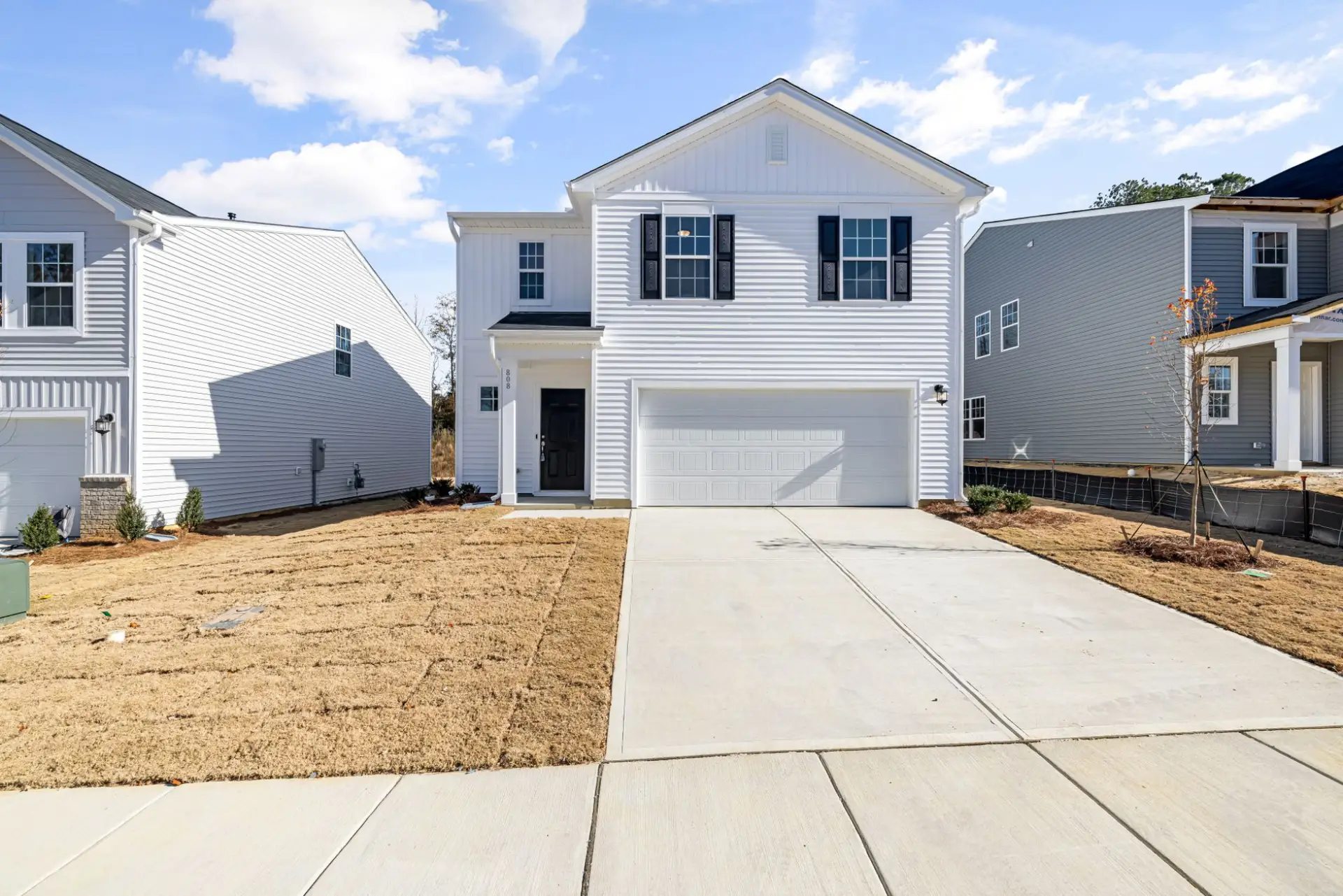
Concrete Driveways in Racine, WI — Residential & Commercial Driveway Contractors
New pours, full replacements, extensions and widening across Racine, Kenosha, Milwaukee and Waukesha Counties. Every estimate breaks out tear-out, base depth and reinforcement, so three bids can be read side by side.
Concrete Driveways in Racine, WI
Racine Premier Concrete is your local resource for concrete driveways, aprons, extensions and full driveway replacements across Racine, Kenosha, Milwaukee and Waukesha Counties. We work with experienced concrete contractors who write estimates a homeowner can actually compare.
A concrete driveway in southeastern Wisconsin is decided by what sits under it. Most of the ground between the lake and the interstate is lake-plain clay and silty clay loam, which drains slowly and holds water into spring. Water that cannot leave the subgrade freezes, lifts the slab, and comes back down somewhere other than where it started. That is why a driveway estimate that says nothing about excavation depth or base course is not really an estimate. Four inches of compacted dense-graded base under residential flatwork is the working minimum, and soft spots found during excavation need more, not a thicker pour on top of the same problem.
The second decision is thickness and reinforcement. Four inches is a walkway spec. Where a vehicle parks or turns, five to six inches is the number, and where an RV, a boat trailer or a delivery truck sits, six inches with #4 rebar on chairs at 18 inches on center rather than fiber alone. The mix matters too: 4,000 psi with air entrainment, because air-entrained concrete gives freezing water somewhere to go instead of pushing the surface off. None of that shows up in a bid that lists one square-footage number and one price. Ask for the thickness, the base depth, the reinforcement and the joint spacing, and three quotes stop looking interchangeable.
What’s Included in a Racine Concrete Driveways Quote
- On-site measurement and a written square-footage takeoff, including the apron and any turnaround area
- Tear-out of the existing driveway and haul-off of the debris, priced as its own line item rather than folded into a lump sum
- Excavation to grade and subgrade compaction in lifts, with soft areas identified before forming starts
- Four inches of compacted dense-graded base course under residential flatwork, deeper where the subgrade will not compact
- Forming and grade staking, with slope set to move water away from the garage and toward the street or a yard drain
- Reinforcement stated on the estimate: fiber in the mix, or #4 rebar on chairs at 18 inches on center where vehicle loads justify it
- A 4,000 psi air-entrained mix specified for freeze-thaw exposure
- Screed, bull float, edging and the finish selected before placement day, with broom finish as the standard for traction
- Saw-cut control joints within the first day, cut to roughly a quarter of the slab depth so cracking happens where it was planned
- Expansion joint material where the new slab meets the garage floor, the sidewalk and the curb
- Curing compound applied after finishing, plus written guidance on de-icing salt and the first winter
- Site cleanup and restoration of the lawn or terrace edge disturbed by trucks and forming
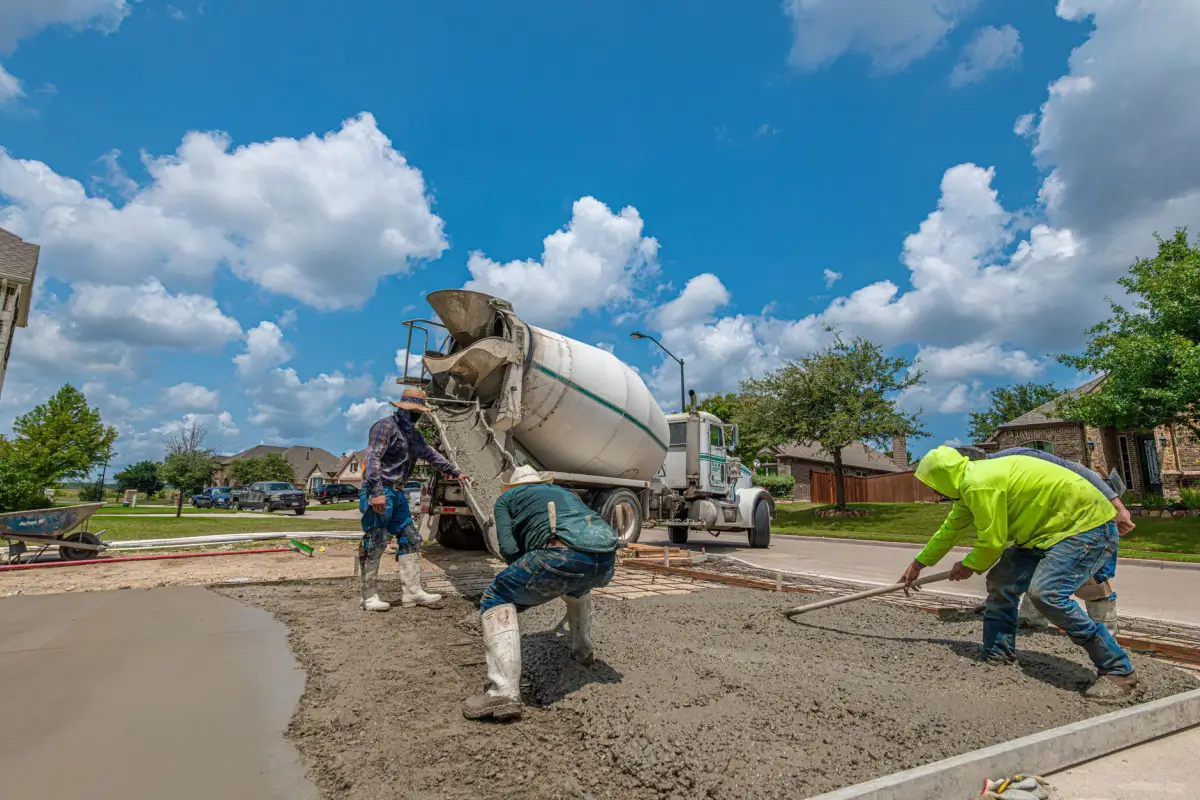
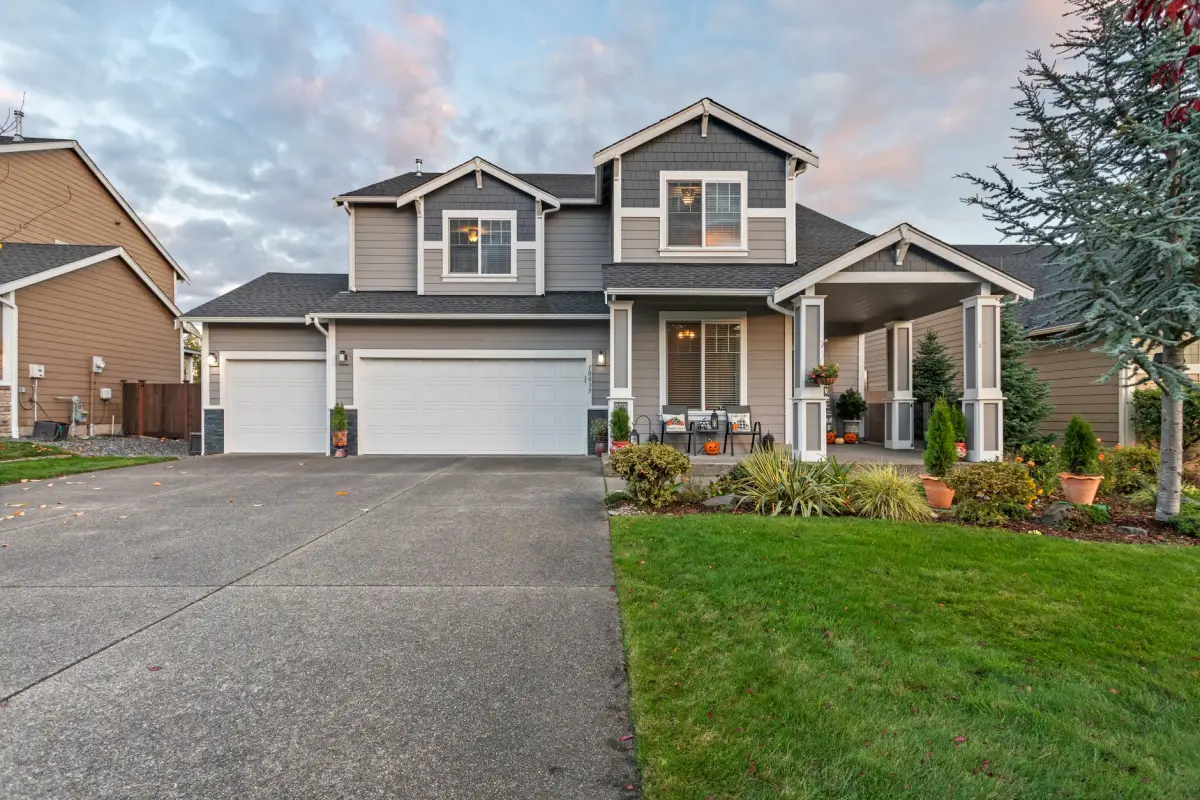
Concrete Driveway Installation in Racine, WI
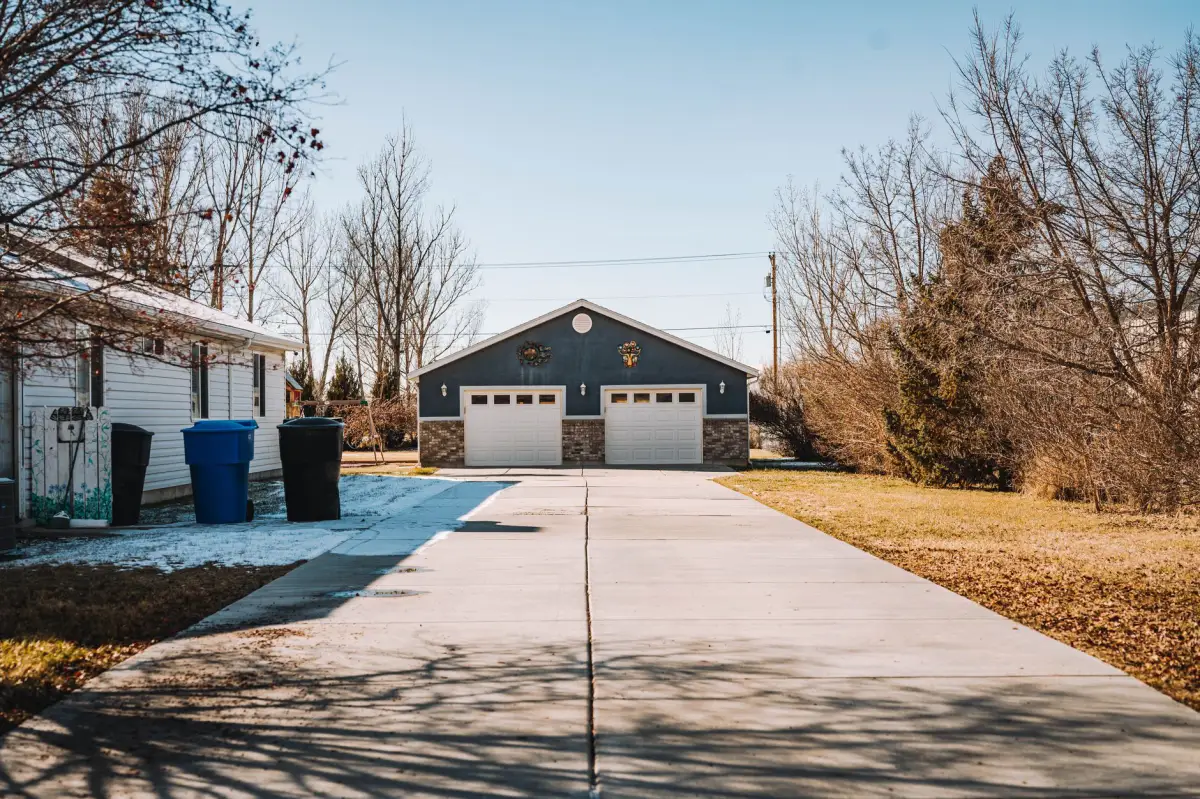
New Concrete Driveway Installation
A first driveway on a lot that has only ever had gravel or lawn starts with grade, not concrete. The excavation has to establish a subgrade that drains and a slope that carries runoff away from the garage slab, which on a lot with a walkout or a low garage entry sometimes means a yard drain or a swale rather than pitch alone. From there it is base course compacted in lifts, forming to the finished elevation, reinforcement sized to the vehicles, and a 4,000 psi air-entrained pour. On new construction the apron where the driveway meets the street usually falls under the municipality's right-of-way rules, so the permit and the required section thickness get confirmed before anyone orders concrete. Expect the driveway to be one of the last exterior items, after utility trenching is backfilled and settled.
Concrete Driveway Replacement
Replacement is mostly a demolition and disposal job with a pour at the end, and the estimate should read that way. Old concrete gets broken out, loaded and hauled off, and the volume of that debris is what drives the removal line item, not the square footage on the surface. A four-inch slab with no reinforcement breaks out quickly. A six-inch slab with rebar through it takes longer and fills more trucks. Once the old slab is gone, the subgrade underneath finally becomes visible, which is when a soft spot or an old utility trench that caused the original failure gets found and corrected. Replacing a driveway without touching what is under it repeats the failure on a slower clock, so the excavation and base are where the money actually goes.
Concrete Driveway Extensions & Widening
Two vehicles and a driveway built for one is the most common reason a Racine homeowner calls about widening. An extension is poured against the existing slab, which means the tie-in is the part that matters. The new section gets its own base and its own thickness, and the joint between old and new is treated as an expansion joint rather than tied with dowels, because the two slabs will move at different rates and a rigid connection just relocates the crack. Matching color is worth being realistic about: a new pour will not match a slab that has weathered for fifteen years, and it will keep changing for the first year. Homeowners who want a uniform look usually either replace the whole driveway or accept a deliberate contrast, such as a border poured in a different finish.
Reinforced Concrete Driveways
Reinforcement does not stop concrete from cracking. It holds the two sides of a crack together and in the same plane, which is the difference between a hairline you can ignore and a lifted edge you catch with a shovel every winter. Fiber mixed into the concrete controls shrinkage cracking during curing and is adequate for a straightforward car-and-light-truck driveway on good subgrade. Steel is the answer where loads or ground conditions are harder: #4 rebar on chairs at 18 inches on center, held up in the slab rather than laid on the base and pulled up during the pour. That applies to RV and boat trailer parking, a driveway that a delivery or dumpster truck uses, a section poured over backfill that has not fully settled, and long runs where the slab spans variable soil.
Concrete Driveway Finishes & Design Options
Broom finish is the default for a reason: it gives traction on a surface that spends four months a year wet, frozen or salted, and it hides minor variation better than a smooth trowel. Beyond that there is exposed aggregate, which washes the surface paste back to reveal the stone and reads as textured rather than flat; integral color mixed into the concrete rather than applied on top; and saw-cut patterns that turn required control joints into a deliberate grid. A stamped or decorative border around a broom-finished field is a common compromise, giving the driveway an edge treatment without stamping several hundred square feet on a clock that runs out in under an hour. Sealer is a maintenance decision, not a finish, and it has to be reapplied.
Concrete vs. Asphalt Driveways in Southeastern Wisconsin
Up-Front Cost
Asphalt is normally the lower number on installation day, and anyone claiming otherwise is selling something. The comparison that matters is cost over the years you intend to own the house, including asphalt sealcoating on a repeating cycle versus a concrete slab that gets nothing but joint maintenance.
Freeze-Thaw and Frost
Both surfaces move with frost, but they fail differently. Asphalt is flexible and tends to deform, rut and alligator-crack. Concrete is rigid and either holds or cracks at a defined location, which is exactly why control joints get saw-cut in the first day. On slow-draining lake-plain clay, base preparation matters more than the surface material for either one.
De-Icing Salt
Salt is harder on concrete than on asphalt, particularly in the first winter before the slab has gained full strength. Scaling and pop-outs on a driveway are usually a salt story, not a mix story. Air-entrained concrete and a curing compound reduce the risk, and sand instead of salt through the first season removes most of it.
Repair and Appearance
Asphalt patches blend in reasonably well and can be overlaid. Concrete patches are visible, permanently, which pushes repair decisions toward replacing full panels between joints instead of filling a section. Concrete also takes color, texture and stamping; asphalt takes one color.
Signs You Need Concrete Driveways
- Cracks wider than about a quarter inch with one side sitting higher than the other, which means the slab is moving and not just shrinking
- The apron at the street has settled and water now stands where the driveway meets the curb
- Surface flaking, pitting or a sandy texture underfoot after a few winters, which is scaling from de-icing salt
- A dip or rut where vehicles park, or a low spot that holds a sheet of ice all winter
- Patched sections that keep re-opening within a season or two
- Two vehicles, one lane of driveway, and no room to turn around without using the lawn
- The garage floor and the driveway have separated enough to catch water at the door opening
How Concrete Driveways Works
- 1
Measure, Layout and a Written Estimate
The first visit establishes square footage, existing slab thickness where it can be seen at a broken edge, and how a concrete truck will actually reach the pour. Access is not a detail. A truck that can back to the forms is one price; a driveway behind a fence, up a rise, or past a garage with no side yard needs a pump or a line pump, and that is a separate cost that belongs on the estimate rather than appearing later. Slope gets checked against where water currently goes, including whether the neighbor's grade or a city terrace controls the finished elevation. The estimate that comes back should name the square footage, the thickness, the base depth, the reinforcement, whether tear-out and haul-off are included, and what happens to the lawn afterward. Anything missing from that list is a question worth asking before signing.
- 2
Tear-Out, Excavation and Base
The old slab is broken out and hauled off, then the excavation goes deeper than the finished slab bottom to make room for base course. This is the step where the actual condition of the ground shows up. Racine-area subgrade is frequently clay that has been wet all spring, and it will not compact when saturated, so the schedule sometimes has to wait for it to dry rather than forcing base over mud. Dense-graded base goes down and gets compacted in lifts rather than in one deep layer, because a compactor only works through so much material at a time. Four inches compacted is the working residential minimum, and soft or organic pockets get dug out and replaced rather than bridged. Utility trenches from a recent service line are treated as known settlement risks and are either compacted properly or reinforced across.
- 3
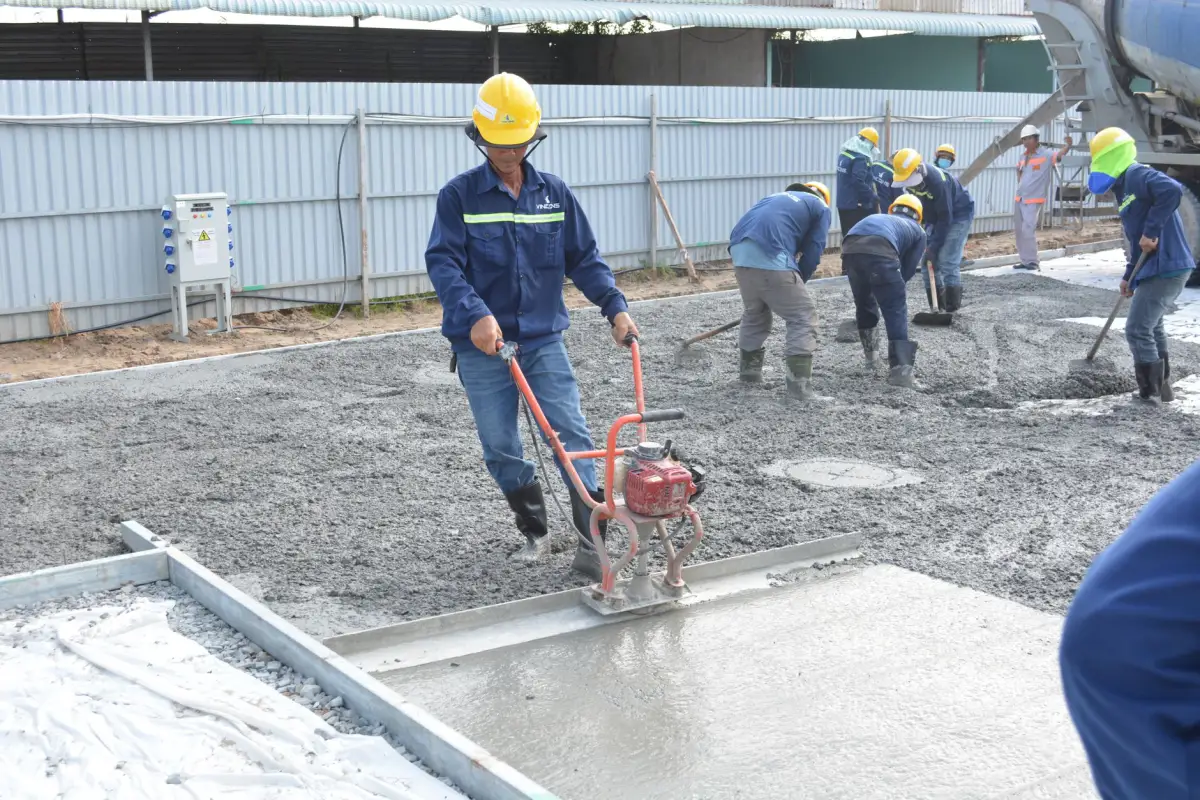
Forming, Reinforcement and Placement
Forms are set to the finished elevation and the slope worked out at the estimate, with grade stakes confirming the fall from the garage to the street. Reinforcement goes in next: fiber is added at the batch plant and needs nothing on site, while rebar is tied and set on chairs so the steel sits inside the slab rather than on the base. Concrete arrives at a specified strength and air content, typically 4,000 psi with air entrainment for exterior exposure in Wisconsin. Water added at the truck to make placement easier reduces the strength of what gets poured, which is worth knowing before a hot afternoon. Placement runs screed, bull float, edge, then a wait for bleed water to leave the surface before final finishing. Finishing too early traps that water and is a common cause of a surface that scales later.
- 4
Joints, Curing and the First Winter
Control joints get saw-cut within the first day, usually inside 6 to 18 hours depending on temperature, and cut to roughly a quarter of the slab depth. Spacing follows slab thickness, which for typical residential work puts joints in the range of 10 to 12 feet apart rather than wherever the panel looks square. Cutting late means the slab has already picked its own crack location. Curing compound goes on after finishing to slow moisture loss, since concrete cures through a chemical reaction rather than by drying out. Foot traffic is normally fine the next day and vehicles after about seven days, though cold weather stretches both. The first winter is the one that decides how the surface ages: skip de-icing salt entirely and use sand for traction, because a slab in its first season has not reached the strength it will eventually have.
What Do Concrete Driveways Cost in Racine, WI?
- Square footage, plus whether the shape is a simple rectangle or has a turnaround, a curve or a wing that adds forming time
- Slab thickness — four inches is walkway spec, five to six inches where vehicles park, more where an RV or trailer sits
- Base course depth, and whether the subgrade needs undercutting and replacement after excavation exposes it
- Reinforcement: fiber in the mix versus #4 rebar on chairs at 18 inches on center
- Tear-out and haul-off volume, which is driven by the thickness and reinforcement of the old slab, not its surface area
- Truck access, and whether a pump or line pump is needed to reach the forms
- Short-load charges when the pour is smaller than a ready-mix truck's minimum load
- Finish selection — broom, exposed aggregate, integral color, saw-cut pattern or a stamped border
- Permit and right-of-way requirements where the apron sits in the city terrace
- Restoration of lawn, terrace or landscaping disturbed by trucks and forming
Nobody publishes an honest per-square-foot number for a driveway, because square footage is the one variable that changes the least between two very different jobs. A flat rectangle with truck access at the curb and a four-inch slab to break out is not the same job as a sloped drive behind a garage that needs a pump, six inches of new concrete, rebar and eleven yards of old slab hauled away. Two quotes, four hundred dollars apart, and only one of them says how thick. Ask both to put thickness, base depth and reinforcement in writing, and the cheaper one usually explains itself.
What to Look for in a Racine Concrete Driveway Contractor
An Estimate That States Thickness
The single most useful line on a driveway bid. Four inches and six inches are different jobs at different prices, and a quote that does not say which one is being sold cannot be compared to anything.
Base Depth in Writing
Base is the part nobody sees and the part that decides whether the slab is still flat in ten years. A bid should say how deep the compacted base course goes and what happens if the excavation turns up soft subgrade.
Tear-Out Priced Separately
Demolition and disposal is a real cost with its own variables. Seeing it as its own line item means it was actually estimated rather than assumed, and it makes the surprise charge conversation much less likely.
A Joint Plan Before the Pour
Control joint spacing and timing should be decided before concrete is ordered, not improvised with a saw the next morning. Ask where the joints will fall and when they will be cut.
A Straight Answer on Access
If a ready-mix truck cannot reach the forms, someone is paying for a pump. Better to hear that at the estimate than on placement day.
Weather Honesty
Clay subgrade that has been under water since March will not compact, and concrete placed in the wrong conditions cures badly. A contractor willing to move a date is protecting the slab, not stalling.
Residential & Commercial Concrete Driveways
Residential
Driveways, aprons, extensions, RV and trailer pads, and full replacements for single-family homes across Racine, Mount Pleasant, Caledonia, Sturtevant and Wind Point. Residential work is scheduled around the fact that the household still needs to park somewhere, so staging and the roughly week-long wait before vehicles return to the slab get planned before demolition starts.
Commercial
Driveways and access drives for multi-family buildings, small commercial sites and mixed-use properties where the drive sees delivery vehicles rather than passenger cars. Thickness, base and reinforcement get sized to the heaviest vehicle that will actually use the surface, and phasing keeps at least one entrance open where a property cannot close entirely.
When Concrete Driveways Isn’t the Right Call
- If the driveway is structurally sound and the only real issue is a few hairline cracks, this is a crack-sealing job, not a replacement. Sealing costs a fraction of a pour and a good contractor will say so.
- A patch smaller than a ready-mix truck's minimum load is an awkward job for everyone. The short-load charge can approach the cost of the concrete itself, so small isolated repairs are often better bundled with other work or handled a different way.
- If you are set on pavers, pavers are a legitimate choice and this is the wrong page. They handle frost movement by being individually resettable, which is a real advantage, and no amount of concrete argument changes that.
- If the budget covers the concrete but not the tear-out and haul-off underneath it, the project is not ready. Pouring over a failed slab to save the demolition line item is how a driveway fails twice.
- Properties outside Racine, Kenosha, Milwaukee and Waukesha Counties are outside the working area, and a contractor traveling that far is charging for the drive whether the estimate shows it or not.
- If the request is to pour in January, the honest answer is to wait. Cold-weather concreting is possible with blankets, heated enclosures and mix adjustments, but on a residential driveway it adds cost and risk for no benefit over waiting for spring.
Frequently Asked Questions
- How thick should a concrete driveway be in Wisconsin?
- Five to six inches where vehicles park or turn. Four inches is a walkway and patio spec, and it is the most common place a cheap driveway bid saves money. Six inches with #4 rebar is the answer for RV parking, boat trailers, or a drive that regularly takes a delivery or dumpster truck. Thickness should be stated on the estimate.
- How long before I can drive on a new concrete driveway?
- Roughly seven days for passenger vehicles, and longer in cold weather. Foot traffic is usually fine after about 24 hours. Concrete keeps gaining strength for weeks after that, so heavy loads such as a moving truck or a dumpster should wait considerably longer than a car does.
- Do I need rebar, or is fiber mesh enough?
- Fiber controls shrinkage cracking during curing and is adequate for a normal car-and-light-truck driveway on well-compacted base. Steel does a different job: it holds the two sides of a crack in the same plane so no edge lifts. Use #4 rebar on chairs at 18 inches on center for heavier loads, over recent backfill, or where the subgrade varies along the run.
- Why did my driveway start flaking after the first winter?
- That is scaling, and de-icing salt on a first-year slab is the usual cause. Concrete has not reached full strength in its first season, and salt drives repeated freeze-thaw cycles right at the surface. Air entrainment and a proper curing compound reduce the risk, but the reliable fix is sand instead of salt through the first winter. Finishing the surface before bleed water has left is the other common cause.
- Can new concrete be poured over an existing driveway?
- Generally no, and it is a bad idea when someone offers. An overlay thin enough to avoid raising the elevation past the garage door is too thin to carry vehicles, and it inherits every crack and every settlement problem in the slab underneath. If the existing slab has failed, it comes out. If the surface is worn but the slab is sound, resurfacing is a genuine option and is a different service.
- Do I need a permit to replace a driveway in Racine?
- Usually yes for the apron portion, because the section between the sidewalk and the street sits in the public right-of-way and the municipality specifies its thickness and slope. Requirements differ between the City of Racine, Mount Pleasant, Caledonia and Sturtevant, so the permit gets confirmed with the local building or public works department before concrete is ordered rather than after.
Learn More
- American Concrete Institute — Publishes ACI 332, the residential concrete code requirements behind the thickness, mix and joint practices described on this page.
- American Concrete Pavement Association — Technical guidance on concrete pavement design, jointing and thickness selection for vehicle loads.
- City of Racine — Permit and right-of-way requirements for driveway aprons and any work between the sidewalk and the street.
Need Concrete Driveways in Racine, WI?
Tell us what’s going on and get an on-site estimate — no charge for the visit, and no obligation to book the work.
Get My Free Estimate