Concrete Removal in Racine, WI — Residential & Commercial Concrete Demolition Contractors
Breaking out and hauling off old driveways, patios, walks and slabs across Racine, Kenosha, Milwaukee and Waukesha Counties, with or without a replacement pour. Priced by volume and access, not by square footage.
Concrete Removal in Racine, WI
Racine Premier Concrete is your local resource for concrete removal, slab demolition and full removal-and-replacement projects across Racine, Kenosha, Milwaukee and Waukesha Counties. We work with experienced concrete contractors who price demolition by what actually has to come out and go somewhere.
Concrete removal is priced by volume and access, which is why square footage is a poor guide to what it costs. A four-inch unreinforced patio and a six-inch driveway with rebar through it can cover the same area and produce very different truckloads, and the second one takes longer to break, loads slower, and fills more of a dumpster. Add access: a slab a machine can drive to and load directly is a different job from one behind a fence, past a gate, or up a grade where every piece has to be carried. Any quote that prices demolition purely off a square-foot number has not looked at the thickness, the reinforcement or the route out.
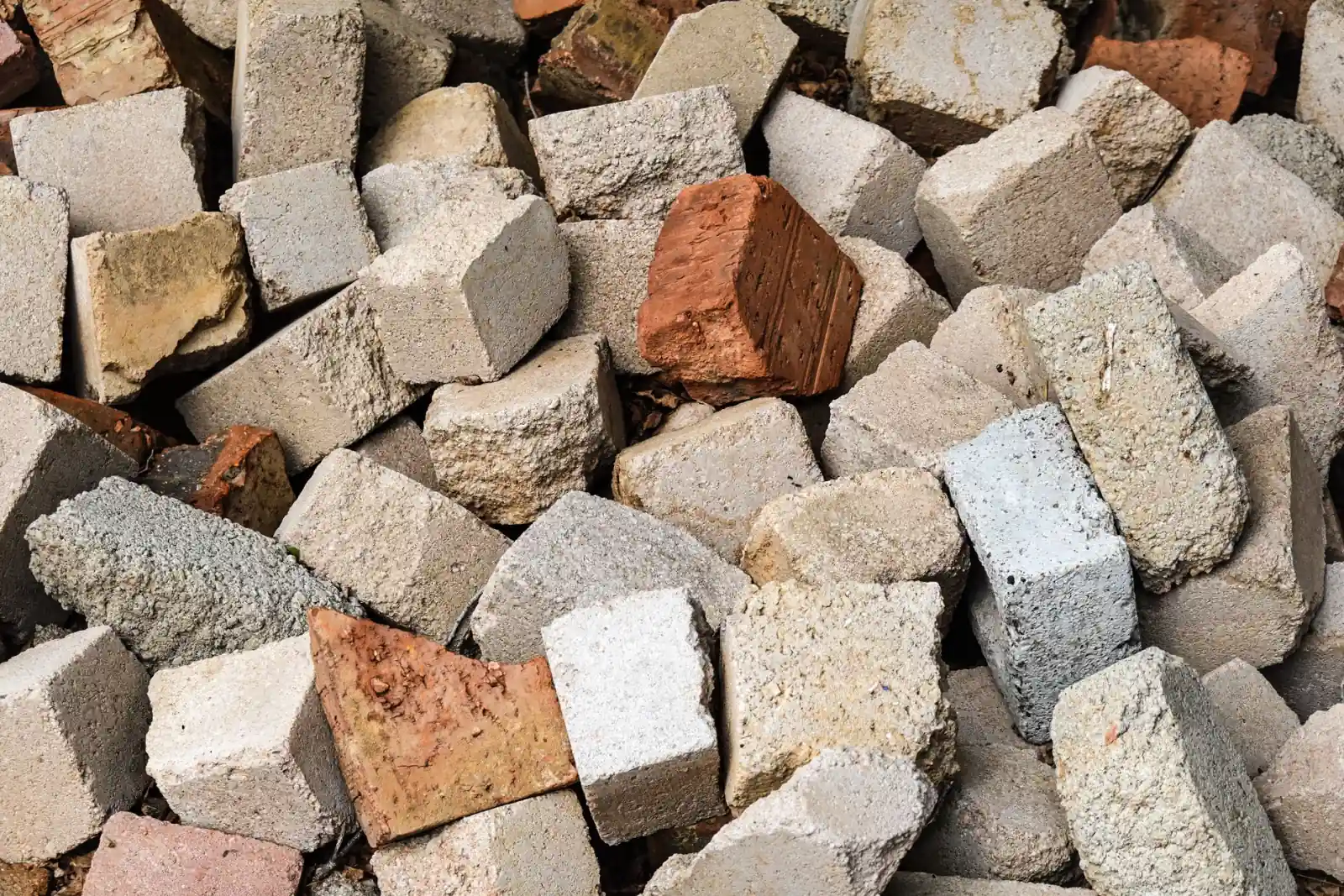
The other half of the job is where the material goes. Clean concrete is a recyclable material and is commonly crushed and reused as aggregate rather than landfilled, which is both the responsible route and often the cheaper one. Concrete that comes out mixed with soil, asphalt, wire mesh or contaminated with oil is a different disposal stream and costs more. Wisconsin law also requires utility locates before any excavation, which on a removal job means calling Diggers Hotline and waiting out the notice period rather than starting the morning the equipment arrives. A gas service running under a driveway apron is not an unusual find, and the locate is free.
What’s Included in a Racine Concrete Removal Quote
- A site assessment covering slab thickness, reinforcement, total volume and the route equipment will take
- Utility locates called through Diggers Hotline, with the required waiting period built into the schedule rather than skipped
- Saw-cutting clean edges where only part of a slab is coming out, so the remaining concrete has a straight, sound face
- Protection for lawn, landscaping and any concrete staying in place along the equipment route
- Breaking and removal using equipment sized to the site, including hand work where a machine cannot reach
- Removal of reinforcing steel and separation of material for recycling where the concrete is clean
- Haul-off and disposal, with clean concrete directed to recycling rather than landfill wherever it qualifies
- Excavation and removal of failed base material where the removal is a prelude to a replacement pour
- Backfill and compaction where nothing is being poured back, so the area is left at a usable grade
- Topsoil and seed or sod restoration where a slab is being removed and returned to lawn
- Coordination of the replacement pour where one is part of the scope, so the base is not left open longer than necessary
- Final cleanup, including sweeping and washing down adjacent surfaces the equipment travelled over
Concrete Removal & Replacement in Racine, WI
Driveway Removal & Replacement
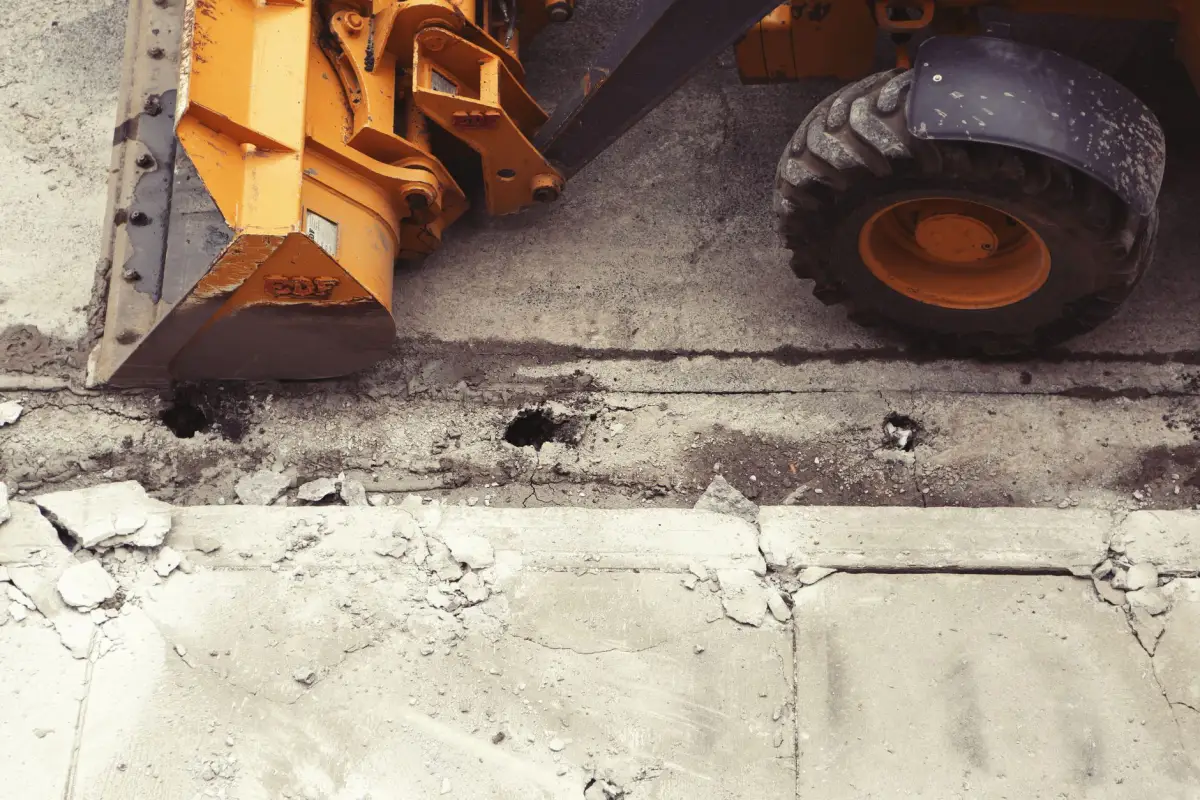
Driveways are the largest concrete removal most properties ever need and the one where volume estimates matter most. A five or six inch slab with rebar produces far more material per square foot than a four inch unreinforced one, and reinforcement slows the breaking as well as complicating the load, since steel has to be separated for the concrete to go to recycling. Access is usually straightforward, because a driveway is by definition where vehicles can reach, though the apron section in the public terrace may need a permit and has to be cut cleanly at the right-of-way line. The most valuable part of driveway removal is what it exposes. With the slab off, the subgrade that caused the original failure is finally visible and correctable, and skipping that correction is the most common way a replacement driveway repeats the original problem.
Patio Concrete Removal
Patio removal is a smaller volume job with a much harder access problem. Most patios sit in backyards behind a fence, a gate or a narrow side yard, and equipment either fits or it does not. Where it does not, the slab comes out in pieces small enough to move by hand or by mini machine, and that labor is the cost rather than the concrete. Fence sections sometimes come out and go back. Lawn along the route gets protected with plywood or mats, because tracked equipment on saturated clay leaves ruts that cost more to repair than the protection would have. Patios are also the most common removal that ends in lawn rather than in new concrete, which means backfilling to grade with material that will support turf and finishing with topsoil rather than leaving a compacted base nothing will grow in.
Sidewalk & Walkway Removal
Sidewalk removal is panel work, and the panel is the unit. Concrete is saw-cut at existing joints so the panels staying keep a clean vertical edge, then broken and removed. Because pedestrian walks are typically four inches and rarely reinforced, the breaking is fast, and the cost is driven more by mobilization and by how many panels are done at once than by the demolition itself. Work in the public terrace brings the municipality in, with a permit and sometimes a specification for what replaces it, and that gets confirmed before the saw comes out. Where a walk crosses a driveway the section is thicker and slower. The other constraint on walk removal is pedestrian access: a walk that serves a public route usually has to stay barricaded and signed for as long as it is open.
Concrete Slab Demolition
Slab demolition covers everything that is not flatwork people walk or drive on: old shed and outbuilding pads, foundations of structures that are already gone, equipment pads, abandoned stoops and buried slabs found during other work. These are the removals with the most surprises in them, because nobody documented what was poured. A pad might be four inches or it might be twelve with a thickened edge and a footing under it, and a slab from a demolished building may include foundation walls extending well below grade. That is why slab demolition is often quoted with a stated assumption and a clear position on what happens if the excavation turns up more concrete than expected. Utility locates matter more here than anywhere else, because abandoned buildings frequently have live service lines still running to them.
Old & Damaged Concrete Replacement
Removal and replacement as a single scope is usually cheaper and always faster than treating them as separate projects, because the base work sits between them and neither trade wants to leave an open excavation waiting. It also keeps responsibility in one place: the same contractor who exposed the subgrade is the one specifying the base under the new slab, which removes the argument about whether a settlement problem was inherited or created. The sequence is demolition, haul-off, subgrade correction, base, forming, reinforcement, pour, joints and cure, and the parts that decide the outcome are in the middle rather than at either end. The most useful question to ask about a removal-and-replacement quote is what happens between the old concrete leaving and the new concrete arriving.
Removing Concrete vs. Pouring Over It
Why Pouring Over Is Tempting
It skips the single largest line item on the job. Demolition, loading, hauling and disposal are real costs, and a quote that eliminates them looks dramatically better. On a genuinely sound slab, a bonded overlay is a legitimate service with its own page.
Why It Usually Fails
New concrete poured over a failed slab inherits everything wrong with it. Every crack telegraphs through, every settled area stays settled, and the base that caused the failure is still down there doing the same thing. The new slab is along for the ride.
The Elevation Problem
Pouring over raises the surface. On a driveway that means the apron, the garage floor transition and the walk connection all move, and on a patio it means the door threshold gets closer. Making the new pour thin enough to avoid that makes it too thin to carry load.
When Each Is Right
Structurally sound slab with a worn surface: resurface it, and save the demolition money legitimately. Slab with offsets, settlement, active cracking or a failed base: remove it. The assessment takes a site visit, and it is the whole decision.
Signs You Need Concrete Removal
- A slab has cracked into sections that move independently, or has settled enough that water now runs the wrong way
- Repairs have been done on the same area more than once and are opening again
- An old shed, garage or structure is gone and its pad or foundation is still in the yard
- A driveway or patio is being replaced and the existing concrete has to come out first
- A slab is in the way of a planned addition, a new garage, landscaping or a utility run
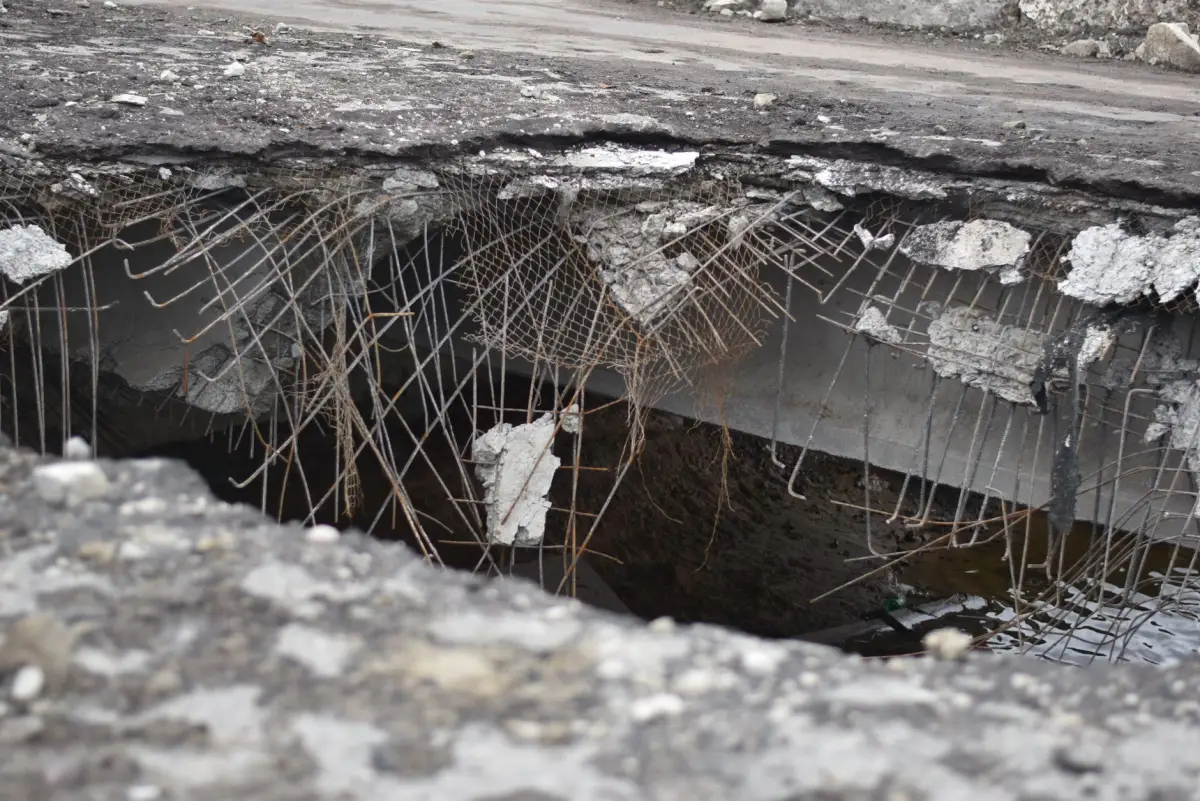
- Concrete is deteriorating to the point where reinforcing steel is exposed across large areas
- An area of concrete is being returned to lawn or garden and needs to be removed and regraded
How Concrete Removal Works
- 1
Assessment, Volume and Locates
A removal estimate starts with the two things that actually drive the price: how much material is coming out and how it gets to a truck. Thickness is measured at a broken edge or a core where possible rather than assumed, reinforcement is checked for, and total volume is calculated in cubic yards, since that is the unit disposal is priced in. The route out is walked: whether a machine can reach the slab, what it will drive over to get there, whether a fence or gate has to come out, and where a dumpster or truck can legally sit. Utility locates are called through Diggers Hotline, which is Wisconsin's one-call service and is free, and the statutory waiting period is built into the schedule. Permits are confirmed for anything in the public right-of-way. The estimate should state the assumed thickness and what happens if the slab turns out to be thicker.
- 2
Protection and Saw Cutting
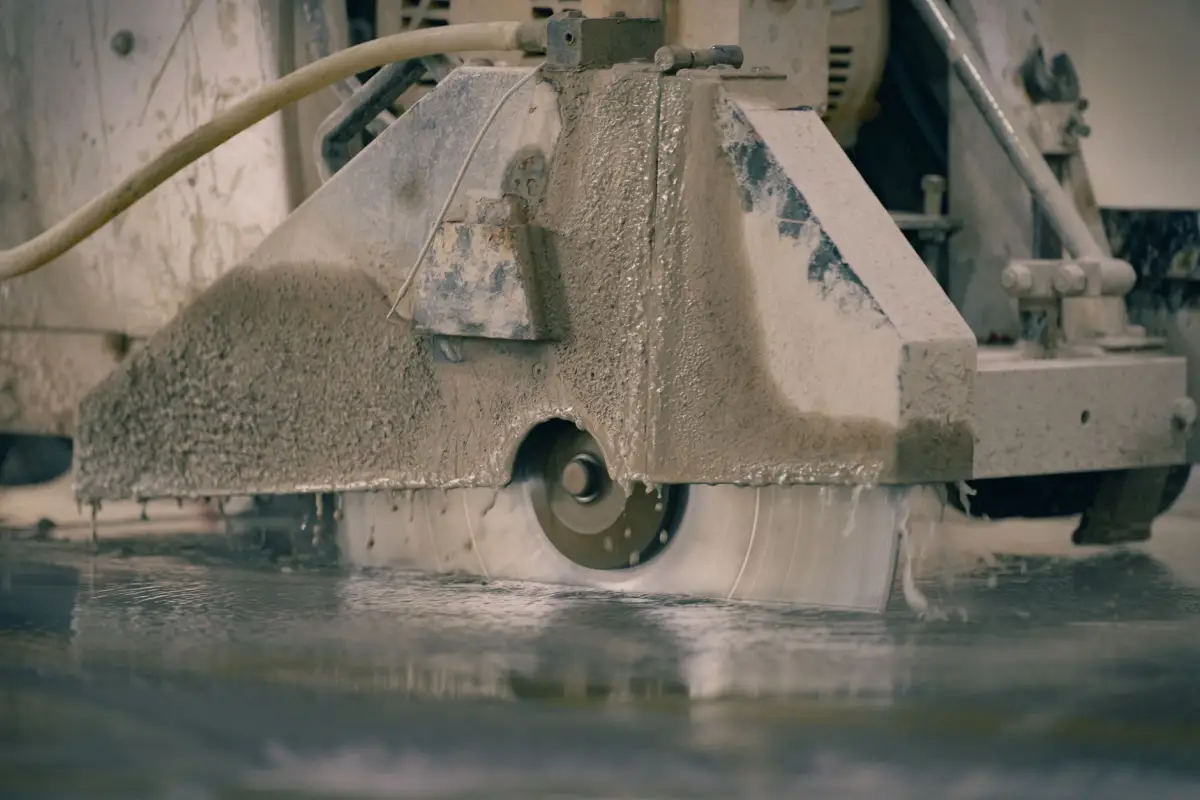
Before anything is broken, the areas that are staying get protected. Plywood or track mats go down over lawn and across any concrete the equipment will travel on, because tracked machines on wet clay leave ruts that cost more to fix than the mats cost to place, and a loaded machine crossing a sound driveway can crack it. Landscaping, downspout discharges, irrigation heads and service meters near the work are identified and either protected or flagged. Where only part of a slab is coming out, the boundary is saw-cut full depth so the remaining concrete keeps a clean vertical face rather than a ragged break that will spall and that cannot be formed against cleanly. Saw cutting is also how a driveway is separated at the right-of-way line and how sidewalk panels are isolated at their existing joints.
- 3
Breaking, Loading and Disposal
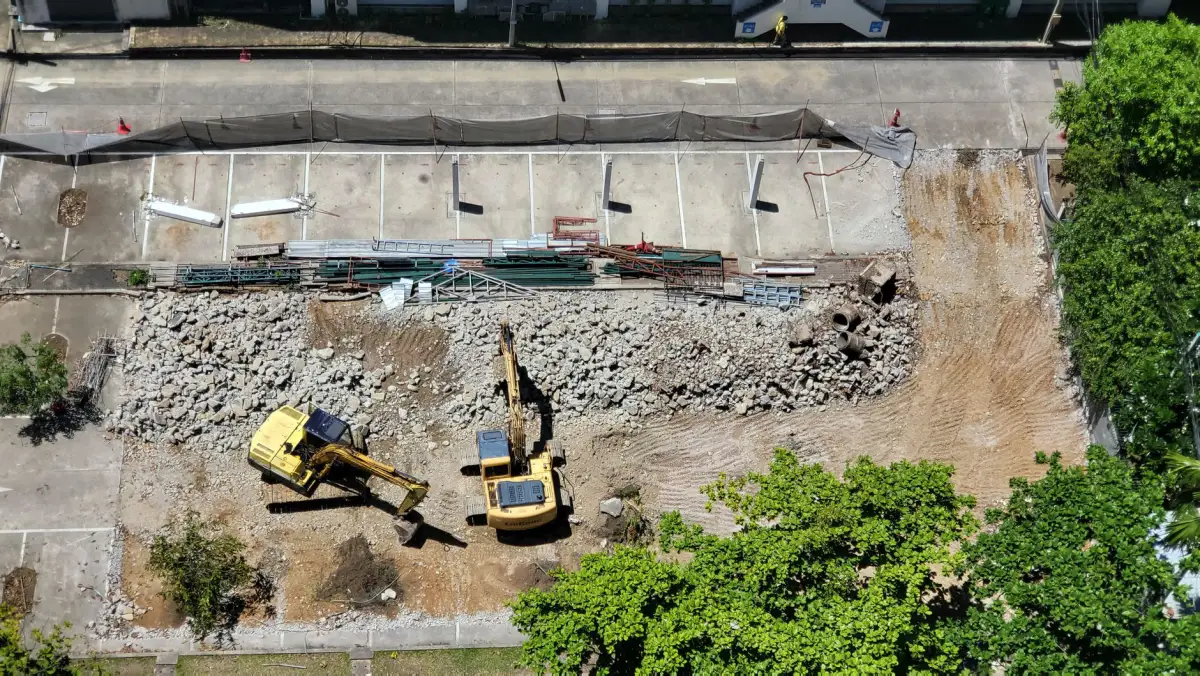
Concrete is broken with equipment matched to the thickness and the access, from a hydraulic breaker on an excavator down to hand-held tools where a machine cannot reach. Reinforcement is cut and separated as the slab comes apart, because clean concrete without steel can go to a recycling facility to be crushed into aggregate, while mixed material goes to a more expensive disposal stream. Loading happens directly into trucks or a dumpster where access allows, and by wheelbarrow or mini loader where it does not, which is the single largest labor variable on a backyard job. Material is hauled off rather than buried on site, which is both the correct practice and generally required, since buried concrete becomes the next owner's excavation surprise and can interfere with drainage and future construction.
- 4
Subgrade, Backfill and What Happens Next
With the concrete gone the ground underneath is finally visible, and this is the most valuable moment in the whole job. If a replacement pour is coming, failed base material, organic pockets and uncompacted utility trenches are excavated and corrected now, because this is the only time they are reachable. If nothing is being poured back, the area is backfilled to grade with suitable material and compacted, then topped with topsoil deep enough to support turf, since a compacted base course left near the surface will not grow grass. Grades are set so water leaves the area rather than collecting where the slab used to shed it, which is a change worth thinking about, because removing a slab changes how a yard drains whether or not anyone intended it to.
What Does Concrete Removal Cost in Racine, WI?
- Total volume in cubic yards, which depends on thickness as much as on area
- Reinforcement, since rebar and mesh slow the breaking and have to be separated for recycling
- Access, and whether equipment can reach the slab or the material has to be moved by hand
- Distance material has to travel from the slab to a truck or dumpster
- Disposal route, with clean recyclable concrete costing less than material mixed with soil, asphalt or contaminants
- Saw cutting where only part of a slab is being removed
- Protection required for lawn, landscaping and concrete staying in place along the equipment route
- Permits for work in the public right-of-way, and any traffic or pedestrian control required
- Whether a replacement pour is part of the same scope, which shares mobilization and avoids a second setup
- Restoration, from backfill and compaction through topsoil, seed or sod where an area returns to lawn
The two numbers that move a removal price most are thickness and access, and neither appears on a satellite image. Six inches with rebar is roughly half again as much material as four inches without it, and it takes longer to break, which compounds. A backyard patio that has to leave through a gate one wheelbarrow at a time can cost more to remove than a driveway three times its area. Removal is also one of the few concrete services where doing it together with the replacement genuinely saves money rather than just being convenient, since the mobilization, the base work and the responsibility all stay in one place.
What to Look for in a Racine Concrete Removal Contractor
Thickness Measured, Not Assumed
Volume drives the price and thickness drives the volume. An estimate that states the assumed thickness, and says what happens if the slab is thicker, is one that was actually calculated.
Locates Called and Waited Out
Diggers Hotline is free and the notice period is required. A contractor planning to break concrete the same morning they were hired has skipped it.
A Protection Plan for What Stays
Mats or plywood over lawn and over concrete the equipment crosses. Tracked machines on saturated clay do real damage, and repairing it afterward costs more than preventing it.
Clean Concrete Sent to Recycling
Crushed concrete is a usable aggregate and diverting it from landfill is standard practice. Ask where the material goes; the answer says something about how the rest of the job will be run.
Nothing Buried On Site
Breaking a slab and burying it in the yard is fast, cheap and wrong. It interferes with drainage, complicates any future excavation and becomes somebody else's problem.
A Clear Plan for the Gap
If a replacement is coming, ask what happens to the subgrade in between. That interval is where a good removal-and-replacement job is either made or wasted.
Residential & Commercial Concrete Removal
Residential
Driveway, patio, walkway, stoop, shed pad and old foundation removal for homes across Racine, Mount Pleasant, Caledonia, Sturtevant and Franksville, with or without a replacement pour. Most residential removal here is limited by access rather than by volume, so the route the material takes out gets settled at the estimate.
Commercial
Parking area, loading dock, sidewalk, equipment pad and building slab demolition for commercial properties, phased so a site keeps functioning during the work. Commercial removal usually involves traffic control, dust and debris management, and a documented disposal route, all of which belong in the scope rather than being handled on the day.
When Concrete Removal Isn’t the Right Call
- If the slab is structurally sound and the surface is simply worn, removal is the expensive answer to a cosmetic problem. Resurfacing costs a fraction of it and is a genuine service, not a compromise.
- If someone offers to break up the concrete and bury it in the yard to save the haul-off, decline. It interferes with drainage, complicates every future excavation on the property and is generally not permitted.
- A very small removal on its own is poor value, because mobilization, locates and disposal minimums do not scale down. If other work is coming, bundling is materially cheaper.
- If the removal is a prelude to construction that has not been designed yet, waiting is usually better. Open subgrade sitting through a season on lake-plain clay takes on water and has to be reworked anyway.
- If access genuinely does not exist, say through a fully enclosed courtyard with no gate wide enough for a machine, be prepared for the labor to dominate the price. It is not a reason not to do the work, but it should not be a surprise.
- Properties outside Racine, Kenosha, Milwaukee and Waukesha Counties fall outside the working area.
Frequently Asked Questions
- How is concrete removal priced?
- By volume and access rather than by surface area. Thickness and reinforcement determine how many cubic yards come out and how long the breaking takes, and access determines how far the material has to be moved to reach a truck. That is why a thick reinforced driveway and a thin patio of the same square footage are priced very differently, and why a backyard slab behind a gate can cost more than a larger one at the curb.
- Can new concrete just be poured over the old slab?
- Not on a slab that has failed. New concrete over old inherits every crack and every settlement problem underneath it, and making the new pour thin enough to avoid raising the elevation past thresholds and aprons makes it too thin to carry load. Where the existing slab is genuinely sound and only the surface is worn, a bonded overlay is a legitimate option and a different service.
- Do I need utility locates before concrete removal?
- Yes. Wisconsin requires notification before excavation, and Diggers Hotline is the free one-call service that arranges it. The notice period has to elapse before digging or breaking starts, which means it is scheduled rather than done the morning of the work. Gas, water, sewer and electrical services routinely run under driveways and aprons, so this is a practical protection and not a formality.
- Where does the old concrete go?
- Clean concrete, with the reinforcing steel separated out, is normally taken to a recycling facility where it is crushed into aggregate that gets reused as base material. Concrete mixed with soil, asphalt or contaminants goes to a different and more expensive disposal stream. It should not be buried on the property, which interferes with drainage and future excavation and is generally not allowed.
- How long does it take to remove a driveway?
- The demolition itself is usually a day or less for a typical residential driveway with good access, but the project spans longer. Locates have to be called and waited out beforehand, and if a replacement pour is part of the scope, subgrade correction, base, forming and the pour follow, with about a week after that before vehicles return to the new slab.
- Will the yard be damaged by the equipment?
- Some disturbance along the equipment route is unavoidable, but most of it is preventable. Plywood or track mats over lawn spread the load and are standard practice, particularly on the clay soils in this area, which rut badly when saturated. The route should be discussed at the estimate, and restoration of the disturbed edge, including topsoil and seed where needed, belongs in the scope rather than being an extra afterward.
Learn More
- Diggers Hotline — Wisconsin's free one-call utility locating service, which must be notified before any excavation or concrete breaking.
- Wisconsin DNR Recycling — State guidance on construction and demolition material, including how clean concrete is handled and recycled.
- EPA Construction and Demolition Materials — Federal information on recycling concrete and other demolition debris rather than sending it to landfill.
Need Concrete Removal in Racine, WI?
Tell us what’s going on and get an on-site estimate — no charge for the visit, and no obligation to book the work.
Get My Free Estimate