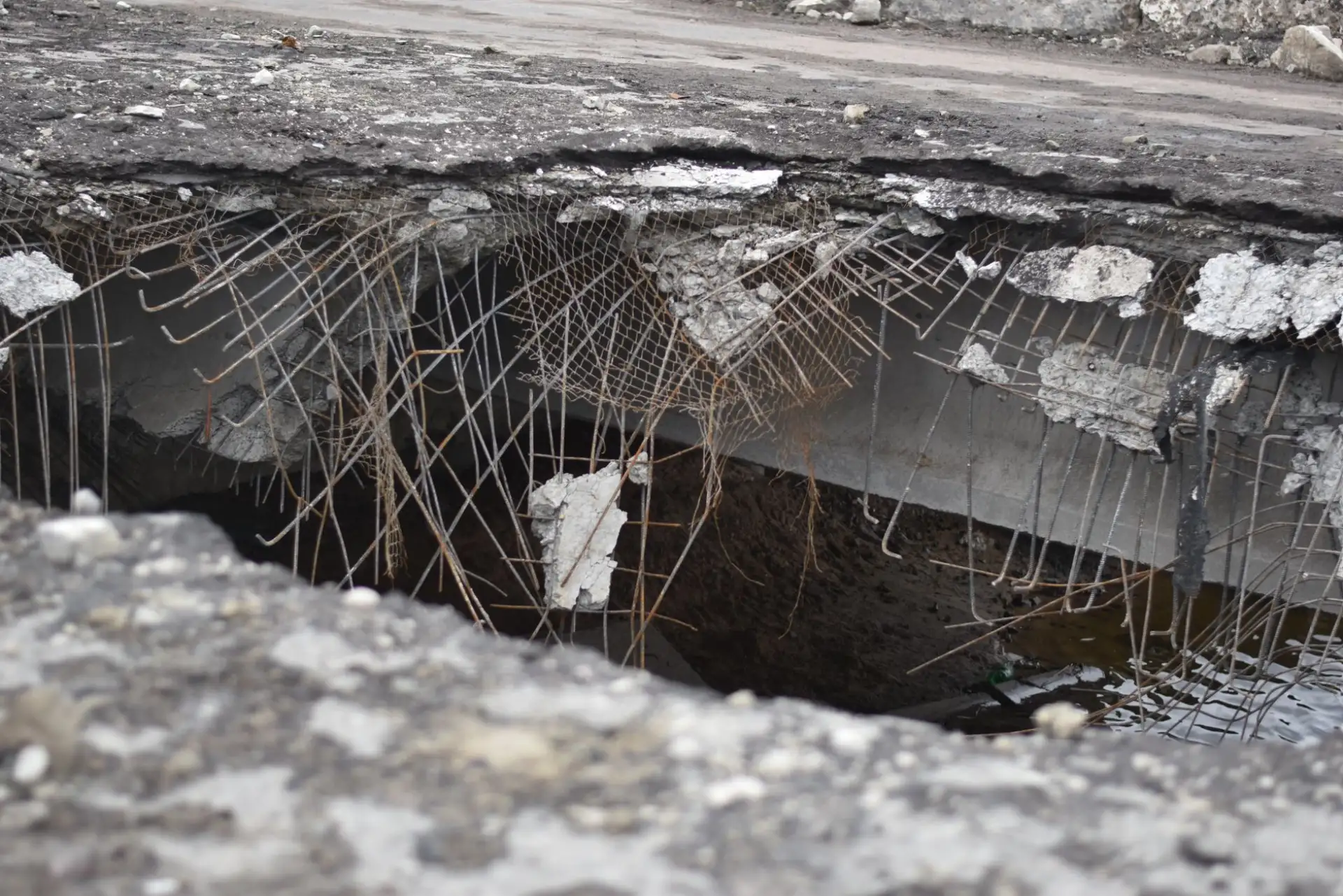
Commercial Concrete Repair in Racine, WI — Parking Lot, Sidewalk & Industrial Floor Repair
Crack and joint repair, panel replacement and floor repair across Racine, Kenosha, Milwaukee and Waukesha Counties. Scopes are triaged by hazard and operational impact, then phased into a plan.
Commercial Concrete Repair in Racine, WI
Racine Premier Concrete is your local resource for commercial concrete repair across Racine, Kenosha, Milwaukee and Waukesha Counties, from parking lot panels to warehouse floor joints. We work with experienced concrete contractors who separate what has to be fixed now from what belongs in next year's capital budget.
Commercial concrete repair is a prioritization problem before it is a construction problem. A property of any size has more defects than budget, and the useful question is not what could be repaired but what should be repaired first. That ranking comes from two things: hazard, meaning what is likely to injure someone or damage a vehicle, and operational impact, meaning what will cost the property more to leave alone than to fix. A spalled joint in a warehouse aisle that lift trucks cross forty times a day is worth more attention than a wider crack in a corner nobody drives on, and the crack will look worse in a photograph.
The second thing that distinguishes commercial repair is that the repair method is a technical selection rather than a preference. Full-depth panel repair, partial-depth repair, dowel retrofit, slab stabilization, joint refilling and surface repair each address a specific failure mode, and applying the wrong one is money spent with a known expiry date. A partial-depth repair placed over a crack that runs full depth will fail at the same line. A joint refilled with flexible sealant where hard wheels cross will let the arris break down anyway. Getting the diagnosis right is most of the value, which is why a commercial repair scope should read as a set of decisions rather than a list of products.
What’s Included in a Racine Commercial Concrete Repair Quote
- A documented condition assessment with each defect located, described, rated and photographed
- Triage by hazard and by operational impact, so spending goes to what actually matters first
- A recommended repair method per defect, with the reasoning, rather than one method applied everywhere
- Sounding of suspect areas to find delamination that is not visible at the surface
- Full-depth panel repair with load transfer dowelled into adjacent panels where traffic crosses
- Partial-depth repair of joint spalls and surface defects where the damage is confined to the upper portion of the slab
- Removal of unsound concrete back to solid material, with saw-cut vertical edges rather than feathered ones
- Reinforcing steel exposed, cleaned or replaced, and treated where corrosion has caused the spalling
- Joint repair on industrial floors, including arris rebuilding and refilling with semi-rigid material where hard wheels cross
- Slab stabilization where voids under panels are causing rocking before the panel has broken
- Joint cleaning and resealing across the scope, which is the maintenance item most responsible for how long the rest lasts
- Phasing, traffic control and pedestrian routing so the property keeps operating through the work
Commercial Concrete Repair in Racine, WI
Commercial Concrete Crack Repair
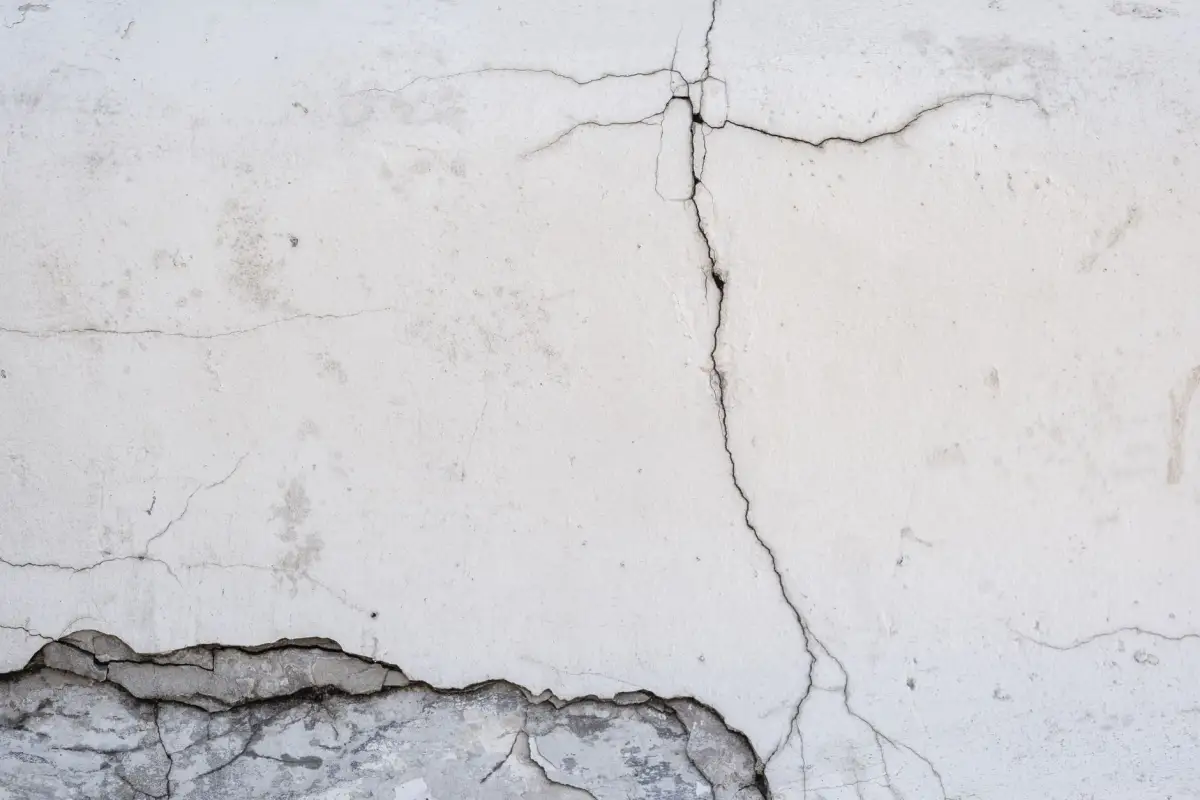
On commercial work, crack repair starts with classifying the crack rather than filling it. A stable crack with both faces in the same plane is routed and sealed to keep water and de-icing chemicals out of the subbase, which is genuine preventive work because water in the base is what converts a harmless crack into a failed panel. A crack that has offset vertically or that is still opening seasonally is reporting movement, and sealing it changes nothing about the movement. Cracks in structural elements are a different matter again and may need an engineer's assessment before any method is selected. The scale changes the economics too: on a commercial property, crack sealing is normally done as a programme across an area rather than crack by crack, because mobilization dominates the cost of small quantities.
Parking Lot Concrete Repair
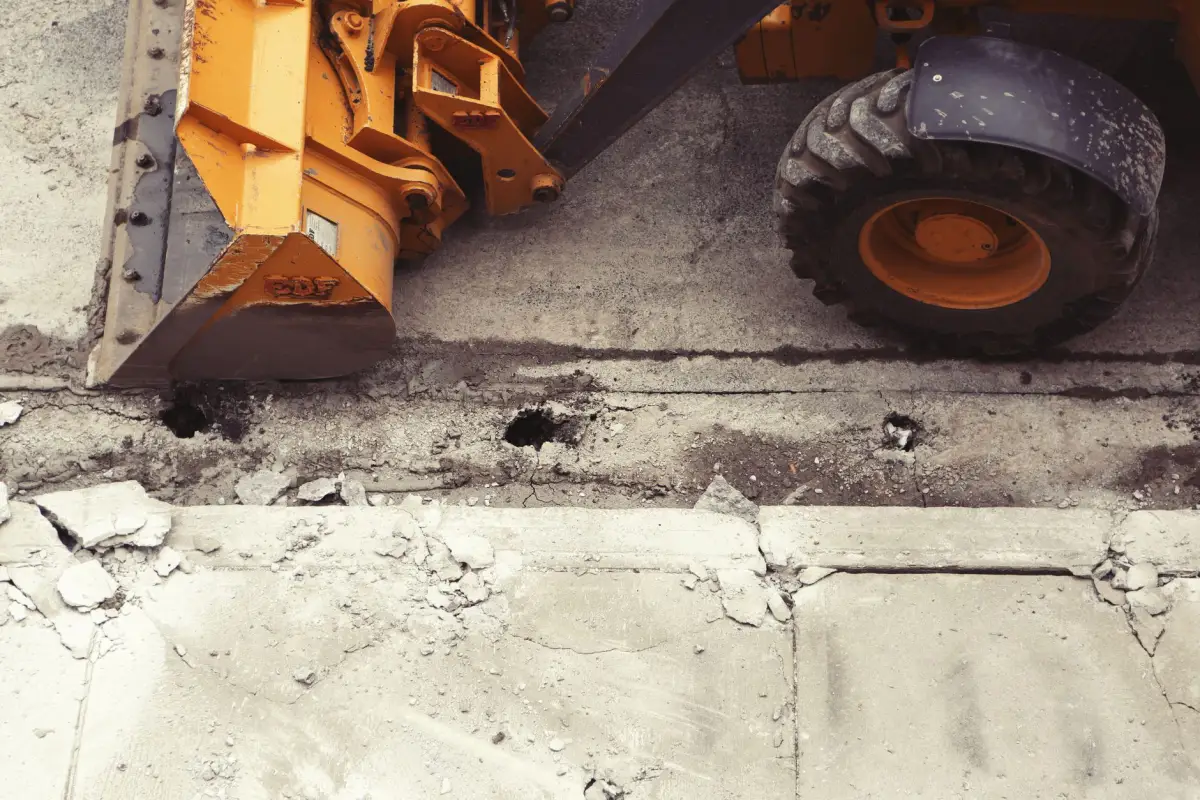
Concrete pavement repair uses a defined set of methods, and choosing between them is the job. Full-depth repair removes a panel or part of one through the entire slab thickness and replaces it with new concrete dowelled into the adjacent panels so load transfers across the new joints, which is what a cracked-through or settled panel requires. Partial-depth repair addresses spalling and deterioration confined to the upper part of the slab, typically along joints, and it depends on the concrete below being sound. Dowel bar retrofit restores load transfer at joints that have lost it without replacing the panels. Slab stabilization injects material to fill voids under panels that have begun to rock, which is preventive rather than corrective and is far cheaper than the replacement it avoids.
Commercial Sidewalk Repair
Walkway repair on commercial property is driven by trip hazard and documented liability rather than by appearance. Vertical offsets are measured rather than estimated, since the difference between a quarter inch and three quarters is the difference between a maintenance item and something that should be addressed promptly. Modest offsets on otherwise sound panels can be ground to a bevel, which removes the hazard immediately at low cost and leaves a visible patch. Panels that have cracked through, that have already been ground once, or where a root will lift them again come out and get replaced with the cause corrected underneath. Work is scheduled around pedestrian access, with routing and barricading in the scope, and the whole set gets documented so the property has a record of what was found and what was done.
Warehouse & Industrial Floor Repair
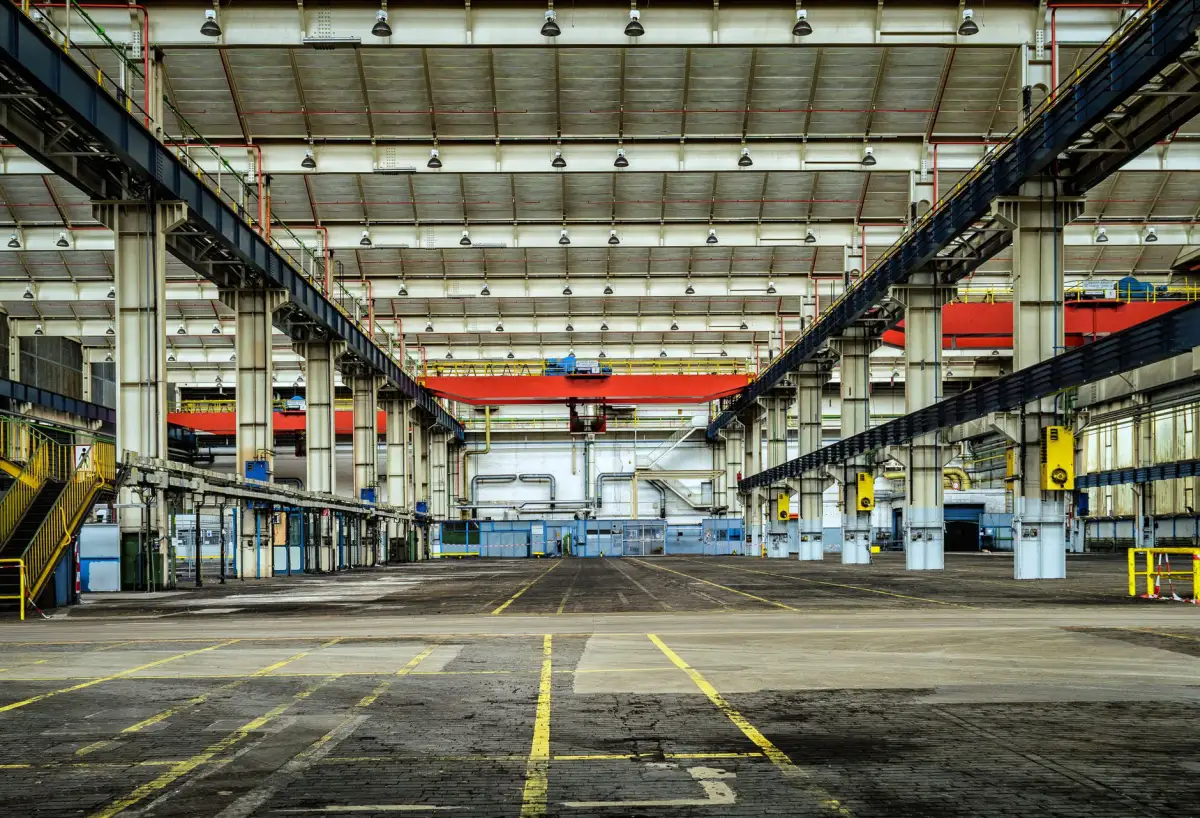
Industrial floor repair is mostly joint repair, because joints are where hard-wheeled traffic does its damage. A joint crossed repeatedly by lift trucks breaks down at the arris, the edge chips back, and the resulting gap gets wider and rougher until it starts damaging the equipment as well as the floor. The correct repair is to saw out the damaged edges to sound concrete, rebuild the arris with a high-strength repair material, and refill with a semi-rigid filler that supports the joint edges rather than a flexible sealant that lets them work. Cracks in the field of a floor are treated according to whether they are moving. Surface wear, dusting and abrasion in traffic paths are addressed separately, either with a densifier or a bonded repair, depending on how much material has been lost.
Damaged Concrete Removal & Replacement
There comes a point on any repair scope where replacement is the cheaper answer, and a good assessment says so rather than continuing to quote patches. That point arrives when repairs would cover a large share of an area, when the same locations have been repaired before, when the subbase rather than the concrete is the problem, or when the accumulated repairs would leave a surface that functions but looks like a quilt. On commercial property there is a further consideration: every repair mobilization has an operational cost in closures, traffic control and disruption, and five separate repair visits may cost the tenants more in aggregate than one replacement phase would have. That calculation belongs to the owner, and it can only be made if the contractor puts the replacement option on the table honestly.
Full-Depth vs. Partial-Depth Concrete Repair
Full-Depth Repair
Removal through the entire slab thickness and replacement with new concrete, with dowels drilled into the adjacent panels so load transfers across the new joints. Required where a panel has cracked through, settled, lost support or broken into pieces. More expensive and more disruptive, and the only method that addresses the subbase underneath.
Partial-Depth Repair
Removal of deteriorated concrete in the upper portion of the slab, typically at joint spalls, with the sound concrete below left in place. Considerably cheaper and faster, and appropriate only where the damage genuinely is confined to the top and the substrate below is solid. Sounding the area first is what determines this.
How the Wrong Choice Fails
A partial-depth repair placed over a crack that runs full depth will crack again at the same line, usually within a season, because the movement below it continues. A full-depth repair used where partial-depth would have worked is simply money spent unnecessarily. The diagnosis, not the product, is what determines the outcome.
The Preventive Option
Slab stabilization sits before both. Where a panel has started to rock because voids have developed beneath it, injecting material to restore support can prevent the panel from cracking at all. It only works before the panel breaks, which is why catching rocking panels early is worth real money.
Signs You Need Commercial Concrete Repair
- Panels rock or deflect noticeably as vehicles cross them
- Joint edges are spalling in drive lanes, dock aprons or warehouse aisles
- Cracks have appeared away from joints, particularly in a pattern rather than singly
- Water ponds where it used to drain, or the same area ices over every winter
- Walkway panels have offsets that staff or tenants have reported, or that an inspection has flagged
- Reinforcing steel is visible in spalled areas, or rust staining is showing at cracks
- Areas sound hollow when tapped, indicating delamination that has not yet broken through
- Repairs have been done in the same locations before and are opening again
- The property is being budgeted for the coming year and needs a documented condition assessment
How Commercial Concrete Repair Works
- 1
Assessment, Sounding and Triage
The assessment covers what is visible and what is not. Cracks are classified by whether they have offset, whether they are still moving and whether they run full depth. Suspect areas are sounded, because delaminated concrete rings hollow while looking intact from above and the true extent of a repair is nearly always larger than the visible damage. Joints are checked for filler condition and arris damage. Panels are checked for rocking, which indicates voids beneath and marks a panel that can still be saved by stabilization rather than replaced. Everything found is located, rated and photographed. The triage that follows ranks by hazard and by operational impact rather than by severity alone, because a moderate defect in a high-traffic aisle usually deserves attention before a severe one in a corner nobody uses.
- 2
Method Selection and Phasing
Each defect gets a method matched to its diagnosis: routing and sealing for stable cracks, partial-depth repair for joint spalls with sound concrete below, full-depth repair with dowelled load transfer for panels that have cracked through or lost support, dowel retrofit where load transfer has failed but the panels are otherwise sound, stabilization where voids exist but the panel is intact, arris rebuilding and semi-rigid refilling for industrial floor joints. The scope is then grouped geographically into phases that can be executed with a single mobilization and a single closure, because scattered repairs are dramatically more expensive per unit than clustered ones. Each phase carries its own traffic control, pedestrian routing and access plan, and the sequencing is agreed with the tenants who know when deliveries and peak traffic occur.
- 3
Preparation and Removal
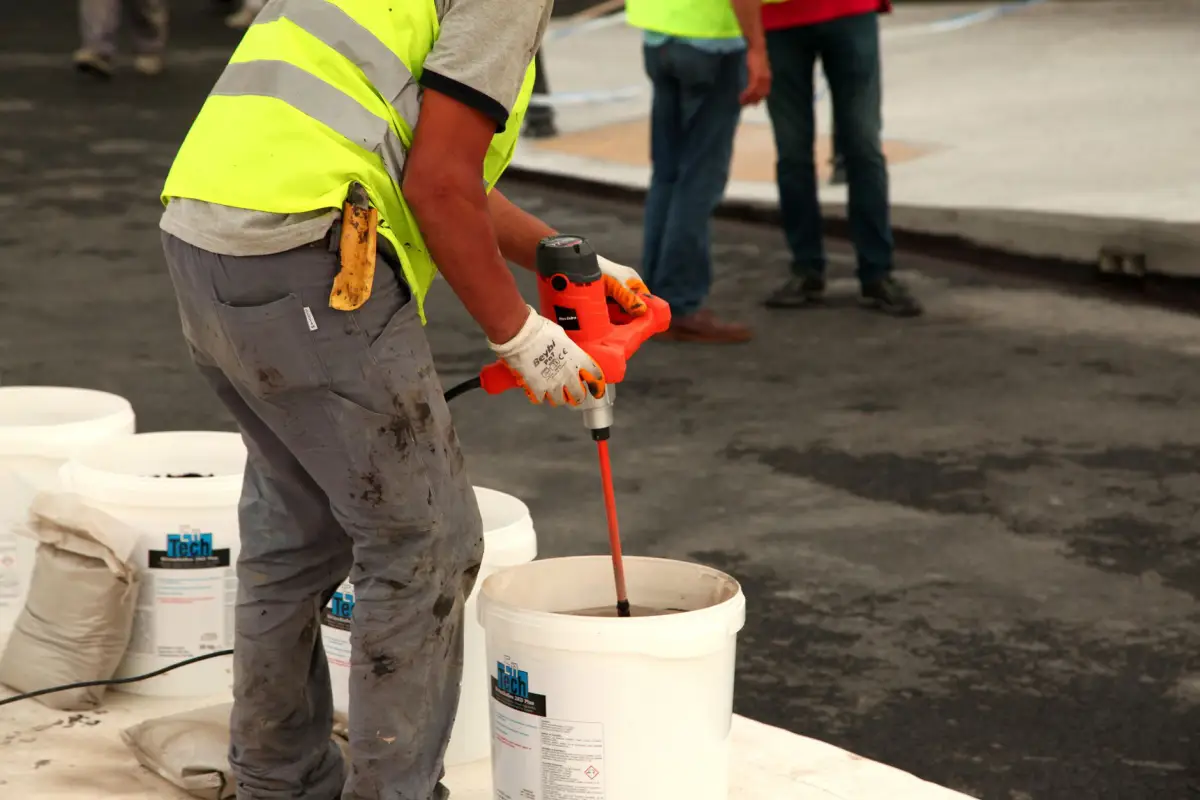
Preparation is where a repair is made durable or made temporary, and it consumes most of the labor. Repair boundaries are saw-cut to clean vertical faces rather than feathered, because a thin feathered edge has no strength and breaks away first. Deteriorated concrete is removed back to sound material, which sounding usually shows is further than it looks. On full-depth repairs the subbase is exposed, checked and corrected, since a panel that failed for want of support will do it again if the void is left. Where reinforcing steel is exposed and corroding, concrete is removed behind the bar so the steel can be cleaned or replaced rather than patched over, because covering corroding steel traps the mechanism and it continues expanding underneath the new material.
- 4
Placement, Curing and Return to Service
Repair materials are selected for the application and for how quickly the area has to reopen, and on commercial work that second factor drives a lot of decisions: a rapid-setting material that allows a drive lane to reopen the same evening can be worth more to the property than the material cost difference. Full-depth repairs are dowelled into adjacent panels, placed, consolidated, finished to match the surrounding texture and cured to specification. Partial-depth repairs are bonded to prepared substrate and finished flush. Joints are refilled with the correct material for the traffic, which for hard-wheeled industrial traffic means a semi-rigid filler supporting the edges rather than a flexible sealant. Return to service follows strength gain rather than the schedule, and opening a repair early to heavy traffic is the fastest way to undo it.
What Does Commercial Concrete Repair Cost in Racine, WI?
- Repair method, since full-depth panel replacement, partial-depth repair, dowel retrofit and stabilization differ substantially
- Whether repairs are clustered or scattered, since mobilization dominates the cost of small quantities
- Depth and extent of removal once sounding establishes the true limits of the damage
- Whether reinforcing steel is exposed and corroding, adding removal behind the bar and steel treatment
- Subbase correction under full-depth repairs
- Material selection, particularly where rapid-setting products are needed to reopen an area quickly
- Traffic control, pedestrian routing and barricading during the work
- After-hours, overnight or weekend work where daytime closures are not possible
- Joint filling and resealing quantities across the scope
- Condition assessment and documentation where the property needs a record and a phased capital plan
The cheapest commercial repair programme is almost never the one with the lowest unit prices. It is the one that groups work geographically, uses the correct method for each defect so nothing is paid for twice, and catches rocking panels while stabilization can still save them. Scattered emergency repairs across a property, one mobilization at a time, cost more in a year than a planned programme costs in three, and they leave the owner with no documentation of what was known and when. Where a scope has grown to the point that repairs would cover a large share of an area, the replacement number belongs on the table beside it rather than being avoided.
What to Look for in a Racine Commercial Concrete Repair Contractor
Sounding, Not Just Looking
Delamination rings hollow while looking intact. A contractor who sounds suspect areas before quoting knows the true extent of the repair rather than the visible one.
A Method Named for Each Defect
Full-depth, partial-depth, retrofit, stabilization, sealing. A scope that applies one method everywhere is a product list, not an assessment.
Triage by Traffic, Not by Photograph
The defect that matters most is often not the one that looks worst. Ranking by hazard and operational impact is what makes a limited budget effective.
Repairs Grouped Geographically
Clustering work into phases with single mobilizations is the largest cost saving available on a commercial repair programme, and a contractor who proposes it is reducing their own invoice.
The Replacement Number Offered
When repairs would cover a large share of an area, an honest contractor puts the replacement option alongside them rather than quoting patches indefinitely.
Return-to-Service Times Stated
How long each area is closed and when traffic can return, area by area. On an operating property that information is worth as much as the repair method.
Residential & Commercial Commercial Concrete Repair
Residential
Residential crack repair, patching and panel replacement are covered on the concrete repair page. The methods overlap; what differs here is the scale, the requirement to keep a property operating through the work, and the need for documented assessment and phased capital planning.
Commercial
Parking lots, drive lanes, dock aprons, dumpster pads, sidewalks, entryways, warehouse and industrial floors across Racine, Kenosha, Milwaukee and Waukesha Counties. Scopes begin with a documented assessment, assign a method per defect, and get grouped into phases that keep the property functioning.
When Commercial Concrete Repair Isn’t the Right Call
- If a defect has been reported once and nobody knows how much else is out there, a single repair visit is the expensive way to find out. A condition assessment first usually pays for itself in what it lets you group.
- If the panels are rocking but not yet broken, stabilization can save them, and that window closes. Waiting until they crack converts a cheap preventive repair into a full-depth replacement.
- If repairs would cover a large share of an area, price the replacement before committing to the repair programme. Past a certain point the repair route costs more and still looks repaired.
- If the concrete is structural, meaning building elements rather than pavement or floors, an engineer should evaluate it before a repair method is selected. That is not a concrete contractor's determination to make alone.
- If the property cannot close any area at any time, including nights and weekends, the traffic control and phasing will dominate the cost. That is workable, but it needs to be in the budget from the start.
- Properties outside Racine, Kenosha, Milwaukee and Waukesha Counties fall outside the working area.
Frequently Asked Questions
- What is the difference between full-depth and partial-depth repair?
- Full-depth repair removes the slab through its entire thickness and replaces it with new concrete dowelled into the adjacent panels, which is required when a panel has cracked through, settled or lost support. Partial-depth repair removes only deteriorated concrete in the upper portion, typically at joint spalls, and depends on sound concrete below. Sounding the area determines which applies, and using partial-depth over a full-depth crack fails at the same line within a season.
- Why do the joints in our warehouse floor keep failing?
- Usually a combination of missing load transfer and the wrong joint filler. Without load transfer the two sides of a joint deflect independently, so a hard wheel drops as it crosses and impacts the far edge. A flexible sealant in that joint leaves the arris unsupported under that impact. The repair is to saw out the damaged edges to sound concrete, rebuild the arris with a high-strength material, and refill with a semi-rigid filler that supports the edges.
- Can a rocking panel be fixed without replacing it?
- Often yes, if it is caught before it breaks. Slab stabilization injects material beneath the panel to fill the voids that caused the rocking and restore uniform support. It is substantially cheaper than full-depth replacement and considerably less disruptive. Once the panel cracks, the window has closed and replacement becomes the option, which is why rocking panels are worth reporting early.
- How do we decide what to repair first with a limited budget?
- Rank by hazard and by operational impact rather than by how bad each defect looks. Trip hazards on pedestrian routes and joint failures in high-frequency traffic lanes come first because one is a liability exposure and the other gets rapidly worse and starts damaging equipment. Preventive items such as stabilizing rocking panels and resealing joints come next because they stop cheap problems becoming expensive ones. Cosmetic cracking in low-traffic areas usually waits.
- Will repairs match the surrounding concrete?
- No. Repair materials differ in color and texture from the original concrete, and the surrounding surface has weathered. Repairs can be finished to match the texture reasonably well and can be laid out to fall on panel boundaries where possible so the result looks deliberate rather than patched. Where appearance is a genuine priority, such as a retail entrance, that is a legitimate argument for replacing a full area rather than repairing part of it.
- How long will an area be closed for repairs?
- It depends on the method and the material. Partial-depth repairs and joint work can often reopen within a day, and rapid-setting materials can bring a drive lane back the same evening at a higher material cost that is frequently worth paying on a commercial site. Full-depth repairs need strength gain before heavy traffic returns, which is longer. Return-to-service times should be stated per area in the scope rather than estimated afterward.
Learn More
- International Concrete Repair Institute — Guidelines on evaluating concrete deterioration, surface preparation and selecting repair methods and materials.
- American Concrete Pavement Association — Technical guidance on concrete pavement preservation, full-depth and partial-depth repair, dowel bar retrofit and slab stabilization.
- FHWA Concrete Pavement Program — Federal Highway Administration resources on concrete pavement performance, repair techniques and preservation strategy.
Need Commercial Concrete Repair in Racine, WI?
Tell us what’s going on and get an on-site estimate — no charge for the visit, and no obligation to book the work.
Get My Free Estimate