Stamped Concrete in Racine, WI — Residential & Commercial Decorative Concrete Contractors
Stamped patios, driveways and walkways across Racine, Kenosha, Milwaukee and Waukesha Counties. Pattern, color and release are chosen before placement day, because the window to stamp a slab closes fast.
Stamped Concrete in Racine, WI
Racine Premier Concrete is your local resource for stamped concrete patios, driveways and walkways throughout Racine, Kenosha, Milwaukee and Waukesha Counties. We work with experienced concrete contractors who treat stamping as a placement-day decision made weeks in advance, not a finish picked at the last minute.
Stamped concrete is a texture pressed into the surface while the slab is still plastic, colored through the mix or at the surface, and then sealed. Everything about it is governed by timing. The concrete has to be firm enough to hold an impression and soft enough to take one, and that window can be under an hour on a warm, windy afternoon. That is why a stamped pour needs a bigger crew than a broom-finished one and why the pattern, the color, the release agent and the joint layout all get settled before the truck is ordered. A stamped slab cannot be re-stamped the next day.
In southeastern Wisconsin there is a second set of decisions that matters more than the pattern: sealer and salt. Stamped concrete depends on a sealer to hold its color and its depth of contrast, and that sealer needs reapplying on a cycle rather than once. De-icing salt is hard on it. A sealed stamped surface is also slicker than a broom finish when wet, which is a real consideration on a walkway that gets used in February, so a non-slip additive in the sealer is standard rather than optional here. None of that makes stamped concrete a bad choice for a Wisconsin property. It makes it a choice with maintenance attached, and worth going in knowing that.
What’s Included in a Racine Stamped Concrete Quote
- Pattern and color selection from physical samples, chosen before placement day rather than from a screen on the morning of the pour
- Excavation, topsoil stripping and compacted dense-graded base, the same subgrade work any flatwork requires
- Forming to the finished shape, including radius forms where the layout curves
- A 4,000 psi air-entrained mix, with integral color batched at the plant when integral color is specified
- Color hardener broadcast and worked into the surface where a denser, more wear-resistant surface color is wanted
- Release agent, powdered or liquid, applied before stamping to keep mats from sticking and to leave the secondary antiquing color
- Stamping with a crew sized to the square footage, because the working window closes on its own schedule
- Detail work at edges, walls and steps where a full mat cannot reach, done with touch-up skins and hand tools
- Control joints saw-cut into the pattern lines where the layout allows, so required joints read as part of the design
- Washing off residual release agent and applying sealer once the slab has cured enough to take it
- A non-slip additive in the sealer on any surface that will be walked on in winter
- Written guidance on resealing intervals and on keeping de-icing salt off the surface
Stamped Concrete Installation in Racine, WI
Stamped Concrete Patios
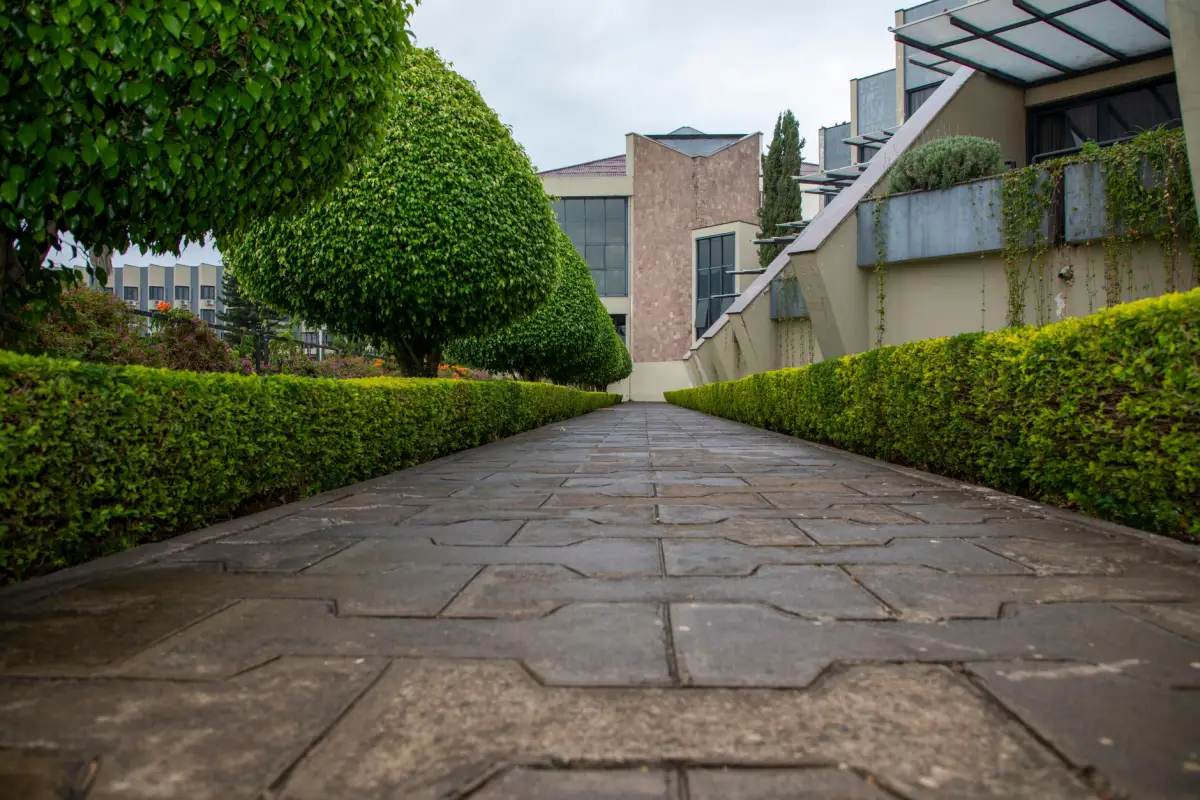
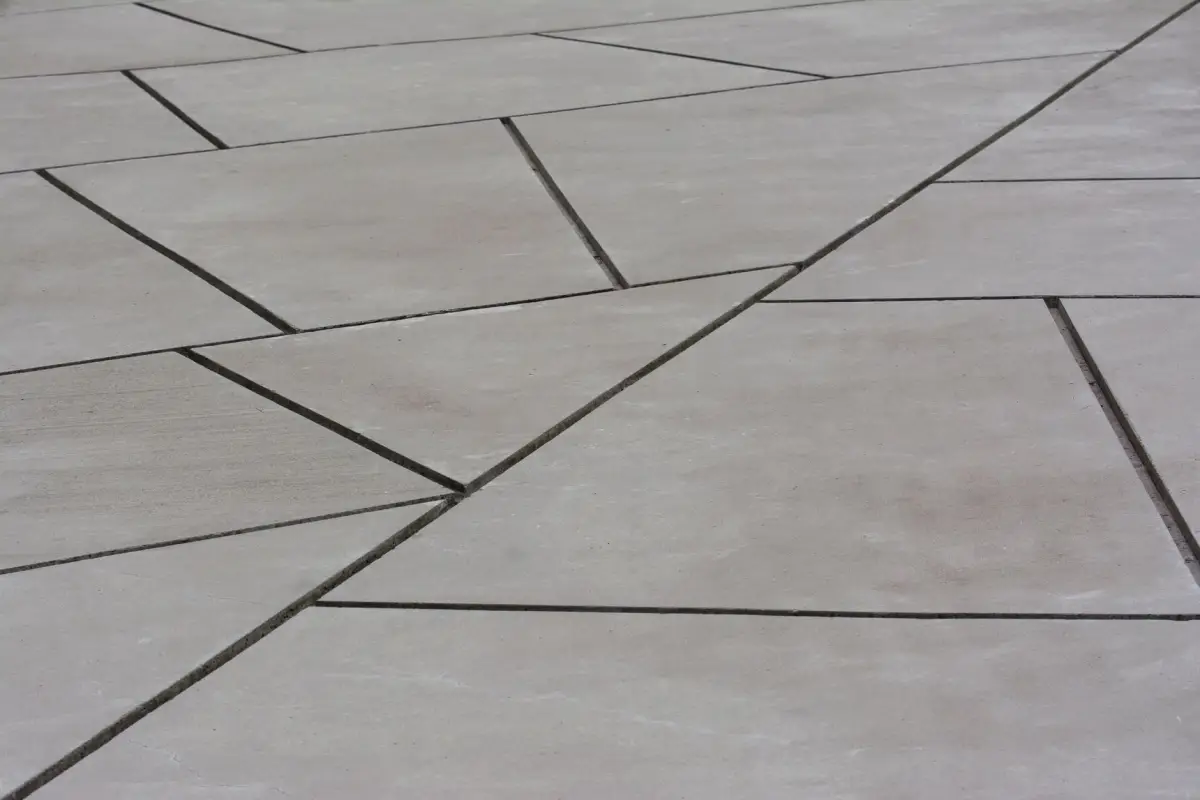
Patios are where stamped concrete earns its cost. A patio is looked at from a fixed position for long stretches, the square footage is usually manageable within a single stamping window, and the surface does not take vehicle loads or plow blades. Slate, unpatterned texture skins and wood plank patterns all read well at patio scale, and a stamped field with a contrasting broom-finished or hand-tooled border is a common way to define the edge. Because a patio has no frost footings and floats on its base, the joint layout still has to be planned and saw-cut, but on a patterned surface those cuts can often be hidden along a grout line so they disappear into the design instead of crossing it. Sealer maintenance still applies, and a patio that sees a grill benefits from being honest about grease before choosing a light color.
Stamped Concrete Driveways
A stamped driveway is a real option in Wisconsin and a more demanding one than a stamped patio. It carries vehicles, so it needs the same five to six inch thickness and the same reinforcement any concrete driveway needs, with the pattern applied on top of that spec rather than in place of it. The larger square footage means the stamping window becomes the constraint: a driveway is usually stamped in sections, with a crew sized to keep up, and the section joints have to be planned so they land where the pattern can absorb them. Winter is the real trade-off. Plow blades and de-icing salt are both hard on a sealed decorative surface, so a stamped driveway here means committing to sand instead of salt, a plow blade with shoes or a rubber edge, and resealing on a schedule.
Stamped Concrete Walkways
Walkways stamp well because they are narrow enough to complete inside a comfortable window and prominent enough that the texture is noticed from the front door and the street. The pattern scale matters more here than anywhere else, since a large ashlar slate pattern on a three-foot walk reads as fragments of stone rather than as stone. Smaller running-bond, cobble and unpatterned textures usually suit a walkway better. Slip resistance is the non-negotiable part: a front walk in Racine gets used in freezing rain, and a sealed stamped surface without a non-slip additive is genuinely slick. Where a walk connects to public sidewalk in the terrace, the municipality controls that section and it typically stays standard concrete, so the design should account for where the decorative work stops.
Stamped Concrete Patterns & Textures
Patterns fall into a few families. Ashlar and random stone read as cut stone laid in a pattern and are the most common patio choice. Running bond and herringbone brick suit walkways and borders, particularly on older homes near Downtown Racine where brick is already part of the streetscape. Wood plank stamps have gotten convincing enough to pass at a glance and work well on a deck-replacement slab. Texture skins add surface interest with no repeating pattern lines at all, which is the right answer when a slab has an awkward shape that would fight a repeating grid. Scale is the decision people underestimate: a pattern sized for a 600-square-foot patio looks wrong on a 90-square-foot landing. Physical samples on site, in daylight, beat catalog photos every time.
Colored & Decorative Stamped Concrete
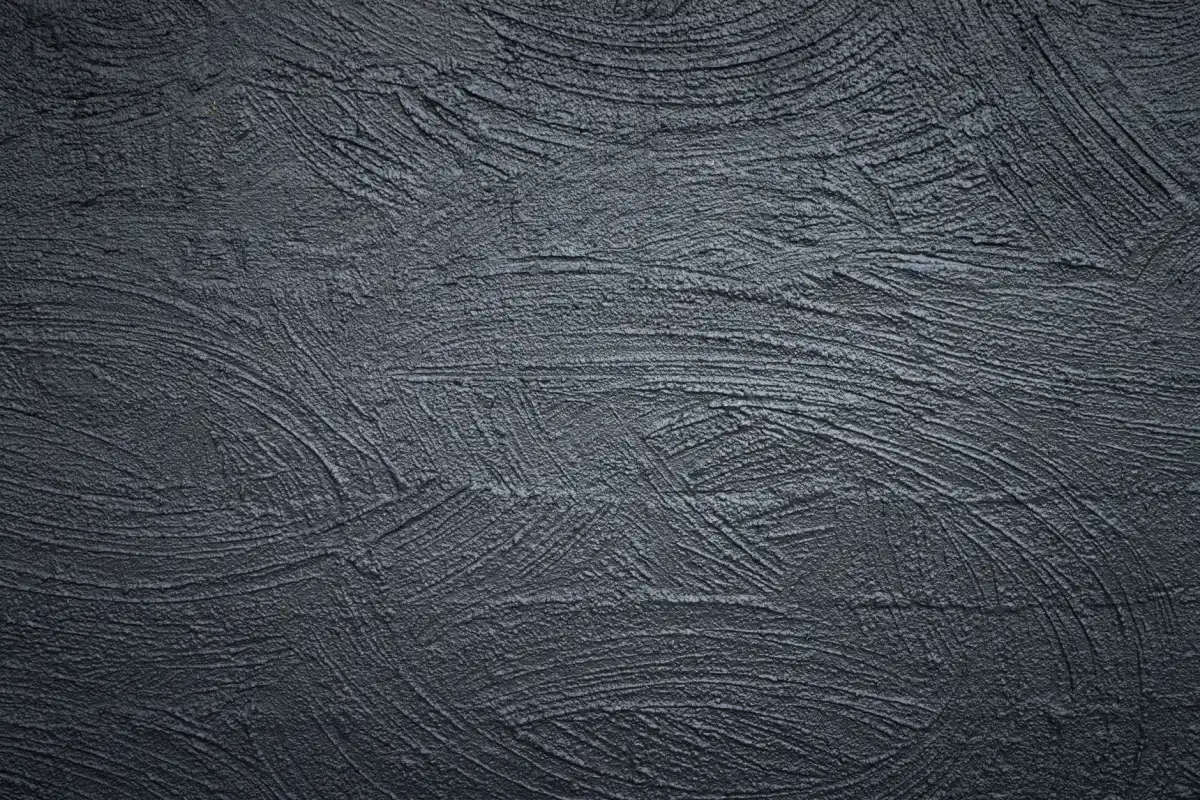
Color arrives three ways and most stamped work uses at least two. Integral color is pigment batched into the concrete, so the color runs all the way through and a chip does not expose gray. Color hardener is broadcast onto the fresh surface and troweled in, producing a denser, more abrasion-resistant surface and a stronger color than integral alone. Release agent, applied before the mats, prevents sticking and leaves a secondary tone in the low points of the texture, which is what makes a stamped surface read as stone rather than as tinted concrete. Antiquing and accent stains can be added afterward for more depth. All of it lives or dies on the sealer, which is the layer that keeps the contrast from flattening out. Plan on reapplying it rather than treating it as a one-time step.
Stamped Concrete vs. Pavers in a Freeze-Thaw Climate
How They Fail
Stamped concrete is one slab and fails as one: a crack crosses the pattern and is visible, and repairs to a colored, sealed surface are difficult to hide. Pavers fail as individual units that can be lifted and reset. On ground that moves, that difference is the whole argument.
Maintenance Load
Stamped concrete needs resealing on a repeating cycle to keep its color and contrast, and salt shortens that cycle. Pavers need joint sand topped up and occasional releveling. Neither is maintenance-free; they ask for different work at different intervals.
Surface in Winter
A sealed stamped surface is slicker when wet than either a broom finish or pavers, which is why a non-slip additive belongs in the sealer on any walking surface here. Pavers keep more texture and more drainage between units without needing an additive.
Design Range
Stamped concrete gives a continuous surface with no joints to catch a chair leg, and it can follow curves and irregular shapes without cutting. Pavers give crisp, repeatable units and a color that will not fade with the sealer. Stamped concrete usually wins on layout freedom; pavers usually win on repairability.
Signs You Need Stamped Concrete
- You want the look of stone or brick on a surface that also has to be shoveled, and a jointed surface is not appealing
- An existing concrete patio or walk is structurally sound but visually flat and you are weighing an overlay against a replacement
- A new patio or driveway is already planned and the decorative decision needs to be made before the concrete is ordered
- A previous stamped surface has lost its color contrast and looks washed out, which is usually a sealer story rather than a concrete one
- A walkway or patio has an irregular shape that would need heavy cutting in pavers
- You are prepared to keep de-icing salt off a decorative surface and reseal it on a cycle rather than once
How Stamped Concrete Works
- 1
Pattern, Color and Layout Selection
Stamped work is decided before it is poured, and the selection visit is where most of the outcome is set. Pattern samples get looked at on site in daylight, at the scale of the actual space, because a pattern that reads well in a catalog can be far too large for a walkway or too busy for a small landing. Color is picked as a combination rather than a single choice: integral color or color hardener for the base, and a release agent tone for the antiquing that sits in the texture. The joint layout is planned at the same time, since control joints have to be cut regardless and the goal is to place them where the pattern can absorb them. Access and square footage determine crew size, because the stamping window is fixed by chemistry and weather rather than by scheduling preference.
- 2
Base Preparation and Forming
Nothing about stamping changes what a slab needs underneath it. Topsoil and organic material come off, the subgrade gets compacted, and dense-graded base course goes in and is compacted in lifts. Thickness follows use rather than finish: four inches for a patio or walk, five to six inches where vehicles park. Forms are set to the finished elevation with slope away from any structure, and isolation joint material goes in where the slab meets a house wall, a stoop or a garage floor. Reinforcement is specified the same way it would be on a plain slab, with fiber for a straightforward patio and steel where loads or ground conditions justify it. A stamped surface hides nothing about what is under it, and a decorative slab that settles is a more expensive problem than a plain one that settles.
- 3
Placement, Color and Stamping
Concrete arrives at 4,000 psi with air entrainment, integrally colored if that was specified. It is screeded, bull floated and edged like any slab. If color hardener is being used it gets broadcast onto the fresh surface in stages and worked in, which both colors and densifies the top layer. Then comes the waiting, which is the part that decides everything: the surface has to lose its bleed water and firm up to the point where a mat leaves a crisp impression that holds. Release agent goes down, and the mats are set, tamped and lifted in sequence, working in a planned direction so the crew is never standing where they still need to stamp. Edges, wall lines and step faces are detailed by hand with touch-up skins. On a warm windy day this whole sequence can compress dramatically, which is why crew size is planned to the square footage.
- 4
Joints, Washing and Sealing
Control joints are saw-cut within the first day, to roughly a quarter of the slab depth, placed along pattern lines wherever the layout permits so a required cut reads as a grout line rather than a scar. Once the slab has cured enough, the residual release agent is washed off, and how aggressively that is done controls how much antiquing tone stays in the low points of the texture. Sealer goes on after the surface is clean and dry, with a non-slip additive on anything that will be walked on in winter. Sealer is what holds the color contrast, so it is the maintenance item that matters: it comes back on a cycle, and de-icing salt shortens that cycle considerably. Sand for winter traction, not salt, is the single most useful habit for keeping a stamped surface looking like it did the first spring.
What Does Stamped Concrete Cost in Racine, WI?
- Square footage, and whether it can be stamped in one working window or has to be sectioned
- Slab thickness, which follows use — four inches for a patio or walk, five to six inches for a driveway
- Pattern complexity, and how much hand detailing is needed at edges, walls, steps and curves
- Color approach: integral color alone, color hardener, or both, plus any accent staining
- Number of colors, since a two-color or multi-tone treatment adds material and labor
- Crew size required to finish the stamping inside the window, which rises steeply with area
- Base course depth and any undercutting the excavation turns up
- Access to the pour, including whether a line pump is needed for a fenced backyard
- Sealer type, the non-slip additive, and whether an initial second coat is included
- Tear-out and haul-off if an existing slab is being replaced rather than a new area built
Stamped concrete costs more than a broom finish for reasons that are all visible on the estimate if it is written properly: more crew on placement day, color material, release, mats, hand detailing and a sealer step that plain concrete skips. What it should not do is cost more while quietly using a thinner slab or less base, and that is worth checking, because the decorative line items can make a bid look thorough while the structural ones stay vague. The number to ask about is not the pattern. It is the thickness, the base depth and how often the sealer needs to come back.
What to Look for in a Racine Stamped Concrete Contractor
Samples on Site, Not on a Screen
Pattern and color should be judged outdoors, at the scale of the actual space, in daylight. Concrete color reads differently on a monitor than it does on a slab in Wisconsin light.
A Crew Sized to the Window
Stamping is a race against the slab setting. Ask how many people will be on site on placement day and how the area will be sectioned. A crew that would be fine for a broom finish is not automatically enough here.
A Joint Plan Inside the Pattern
Control joints are required whether or not a slab is decorative. The difference between a good stamped job and an average one is often whether those cuts were planned into the pattern lines or added afterward across it.
A Straight Answer About Sealer
Sealer is a maintenance commitment, not a finish step. A contractor who explains the reapplication cycle and what salt does to it is telling you what owning the surface is actually like.
Slip Resistance Addressed Without Being Asked
A sealed decorative surface used in a Wisconsin winter needs a non-slip additive. If it does not come up, raise it.
The Same Structural Spec as Plain Concrete
Thickness, base and reinforcement do not get easier because the surface is decorative. A stamped slab on a thin base fails the same way a plain one does, and costs more to have failed.
Residential & Commercial Stamped Concrete
Residential
Stamped patios, front walks, entry landings, pool decks and driveways for homes throughout Racine, Mount Pleasant, Caledonia, Wind Point and Sturtevant. Residential stamped work is usually about matching a house rather than filling an area, so pattern scale and color get chosen against the brick, siding and roof already on the property.
Commercial
Stamped entryways, courtyard surfaces, plaza areas and decorative bands for retail, hospitality and multi-family properties. Commercial stamped work carries more foot traffic and more liability, so slip resistance and a realistic resealing schedule are part of the specification rather than an afterthought, and phasing keeps entrances usable during the work.
When Stamped Concrete Isn’t the Right Call
- If de-icing salt is going to be used on the surface every winter, stamped concrete is the wrong finish. Salt attacks the sealer and then the surface, and a decorative slab that has scaled is far more expensive to look at than a plain one.
- If nobody is going to reseal it, do not buy it. Stamped concrete without maintained sealer flattens to a gray textured slab in a few years, which is a lot of money for texture alone.
- A slab that has already cracked through and settled is not a stamping candidate. Stamping is a finish applied to fresh concrete, so the structural problem gets solved first or the pattern just decorates a failure.
- If the surface has to be plowed with a steel blade on bare concrete, expect damage. Stamped driveways here work when the winter plan is sand, a rubber or shoed blade, and patience.
- If the priority is the lowest cost per square foot, a broom finish with a saw-cut pattern or a decorative border gets a large part of the visual effect for considerably less.
- Properties outside Racine, Kenosha, Milwaukee and Waukesha Counties fall outside the working area.
Frequently Asked Questions
- Does stamped concrete hold up to Wisconsin winters?
- Yes, when it is specified and maintained for the climate. That means an air-entrained mix, a properly cured slab, a sealer with a non-slip additive that is reapplied on a cycle, and sand rather than de-icing salt for traction. Salt is the single biggest threat to a stamped surface here, and it works on the sealer first and the concrete second.
- How often does stamped concrete need to be resealed?
- On a repeating cycle measured in a small number of years, and sooner on a surface that gets sun, traffic and winter chemicals. The visible cue is color contrast flattening out and the antiquing tone in the texture starting to look washed. Resealing is the maintenance item that decides whether stamped concrete still looks like the day it was finished a decade later.
- Is stamped concrete slippery?
- A sealed stamped surface is slicker when wet than a broom finish, yes. The standard fix is a non-slip additive mixed into the sealer, which is normal practice on any walking surface in a climate with freezing rain. Deeper textures also help. It is a solvable problem, but it has to be solved deliberately rather than assumed.
- Can an existing concrete patio be stamped?
- Not directly. Stamping presses a pattern into plastic concrete, so it only happens on a fresh pour. What can be done on an existing sound slab is a stamped or textured overlay, which is a resurfacing product applied over the top. That is a genuine option when the slab underneath is structurally fine, and a bad one when it is cracked through or settling.
- How long does stamped concrete take from start to finish?
- Excavation, base and forming take the same time they would for any slab. Placement and stamping happen in a single day, and it is an intense one, since the stamping window is short. Sealing waits until the slab has cured enough to accept it, which is typically a return visit rather than the same day. Foot traffic normally resumes after about 24 hours and vehicles on a stamped driveway after roughly a week.
- Does stamped concrete crack more than regular concrete?
- No, it cracks the same amount for the same reasons, but the cracks are more noticeable on a patterned, colored surface and harder to repair invisibly. That is why joint layout matters more on stamped work: control joints get planned along pattern lines so the slab cracks where it was told to, in a place the design can absorb.
Learn More
- American Society of Concrete Contractors — Industry association whose Decorative Concrete Council publishes guidance on stamping, coloring and sealing practices.
- American Concrete Institute — Standards behind the mix design, air entrainment, curing and jointing practices a decorative slab still has to follow.
- National Ready Mixed Concrete Association — Technical resources on ready-mixed concrete, including integral color, air content and cold-weather placement.
Need Stamped Concrete in Racine, WI?
Tell us what’s going on and get an on-site estimate — no charge for the visit, and no obligation to book the work.
Get My Free Estimate