Decorative Concrete in Racine, WI — Residential & Commercial Decorative Concrete Contractors
Colored concrete, exposed aggregate, textured finishes, saw-cut patterns and custom borders across Racine, Kenosha, Milwaukee and Waukesha Counties. Stamping has its own page; this is everything else.
Decorative Concrete in Racine, WI
Racine Premier Concrete is your local resource for decorative concrete, colored concrete and custom finishes across Racine, Kenosha, Milwaukee and Waukesha Counties. We work with experienced concrete contractors who choose a decorative approach against how a surface will be used in winter, not just how it photographs in July.
Decorative concrete is a broad category, and it is worth separating from stamping. Stamped concrete presses a pattern into a plastic slab with mats, and it has its own page because the technique, the timing and the buyer intent are all distinct. Everything else falls here: how concrete gets its color, how its surface texture is created, how a pattern is cut rather than pressed, and how borders, bands and inlays are used to define an area. Most of these treatments are cheaper than stamping, several of them are more durable, and a few are considerably better suited to a climate where the surface spends a third of the year wet or frozen.
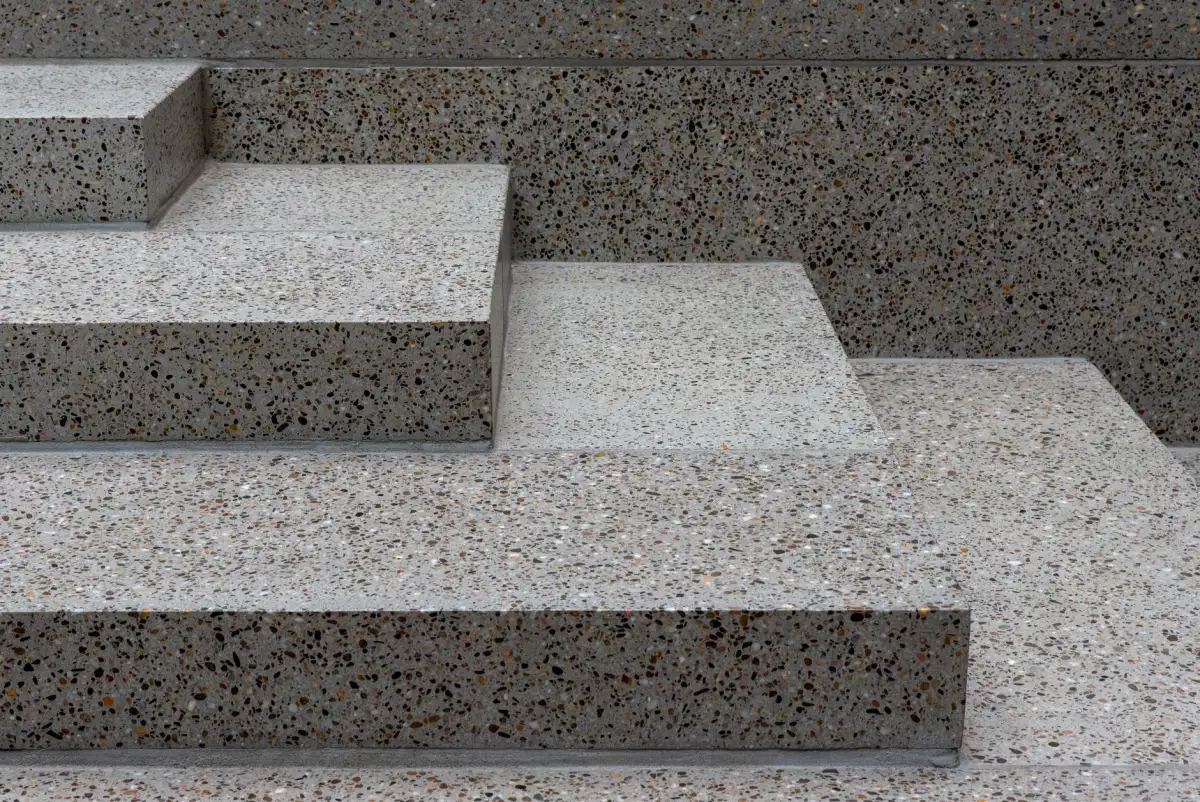
The decision that matters most in southeastern Wisconsin is not which finish looks best in a catalog. It is which finish still looks right after five winters of freeze-thaw cycling and whatever is used for traction. Integral color runs all the way through the slab and does not disappear where a corner chips. Exposed aggregate gives texture and grip that reads well wet, hides staining, and does not depend on a sealer to look intentional. A rock salt finish, on the other hand, deliberately creates small pits in the surface, and pits hold water that then freezes, which is why it is a poor choice here even though it is common in warmer regions. Knowing which treatments fight this climate and which work with it is most of the value in the conversation.
What’s Included in a Racine Decorative Concrete Quote
- A finish recommendation matched to how the surface is actually used, including whether it gets shoveled and salted
- Color selection from physical samples viewed on site in daylight rather than from a chart or a screen
- The same base and thickness specification any slab requires, since a decorative finish does not change what the concrete needs underneath
- Integral color batched at the plant where full-depth color is specified
- Color hardener broadcast and worked into the surface where a denser, more saturated surface color is wanted
- Exposed aggregate produced by surface retarder and washing, or by seeding aggregate into the fresh surface
- Textured finishes including broom, swirl, float and hand-tooled treatments
- Saw-cut scoring and pattern layout, planned so required control joints become part of the design
- Borders, bands and contrasting-finish edges formed and placed as part of the same pour where possible
- Sealer selected for the finish and the exposure, with a non-slip additive on any walking surface
- Joint layout designed before placement rather than cut wherever convenient afterward
- Written maintenance guidance covering resealing intervals and de-icing chemicals
Decorative Concrete Services in Racine, WI
Colored Concrete
Color arrives three main ways and they are not interchangeable. Integral color is pigment batched into the concrete at the plant, so the color runs through the full depth of the slab, which means a chipped edge or a spalled corner still shows color rather than gray. It is the most stable option outdoors and the one that survives wear best, at the cost of a somewhat muted palette. Color hardener is broadcast onto the fresh surface and worked in, producing both a stronger color and a denser, more abrasion-resistant top layer, but only to the depth it penetrates. Stains and dyes are applied to cured concrete, which makes them the only way to color a slab that already exists, and acid stains in particular give a variegated, mottled result that reads as natural stone rather than as painted concrete.
Textured Concrete Finishes
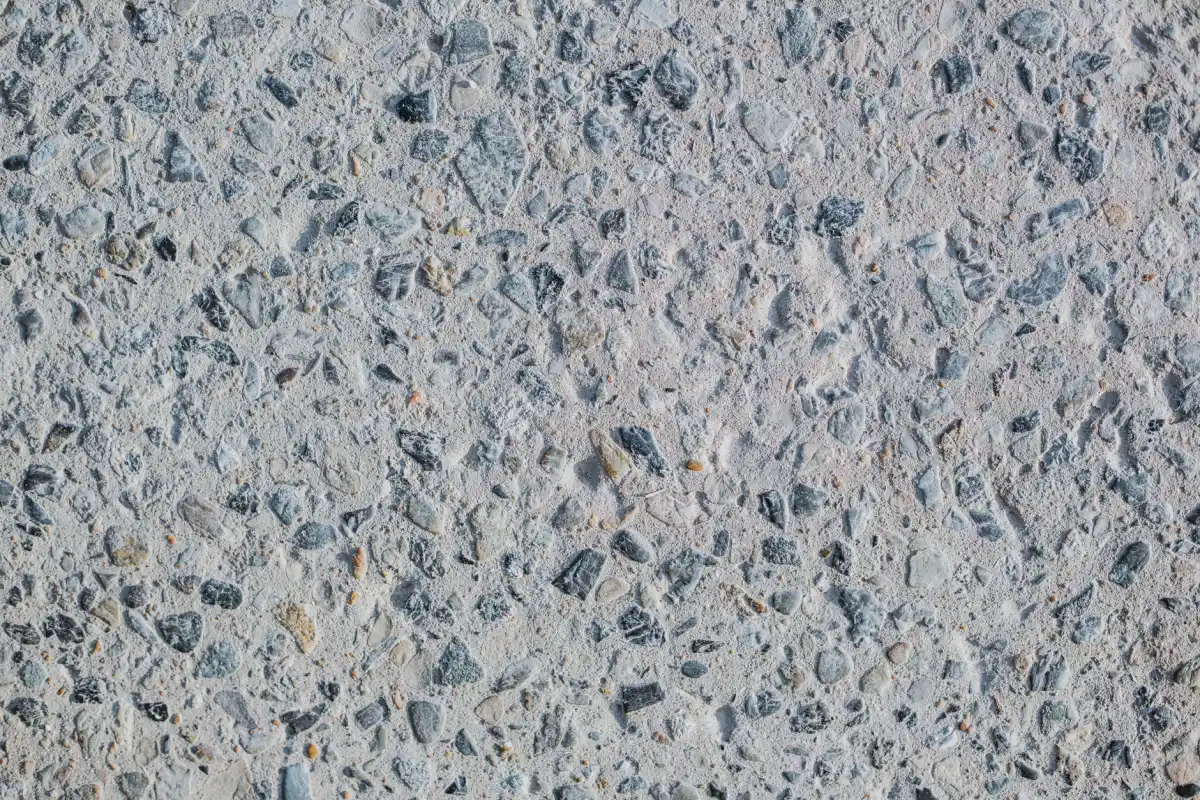
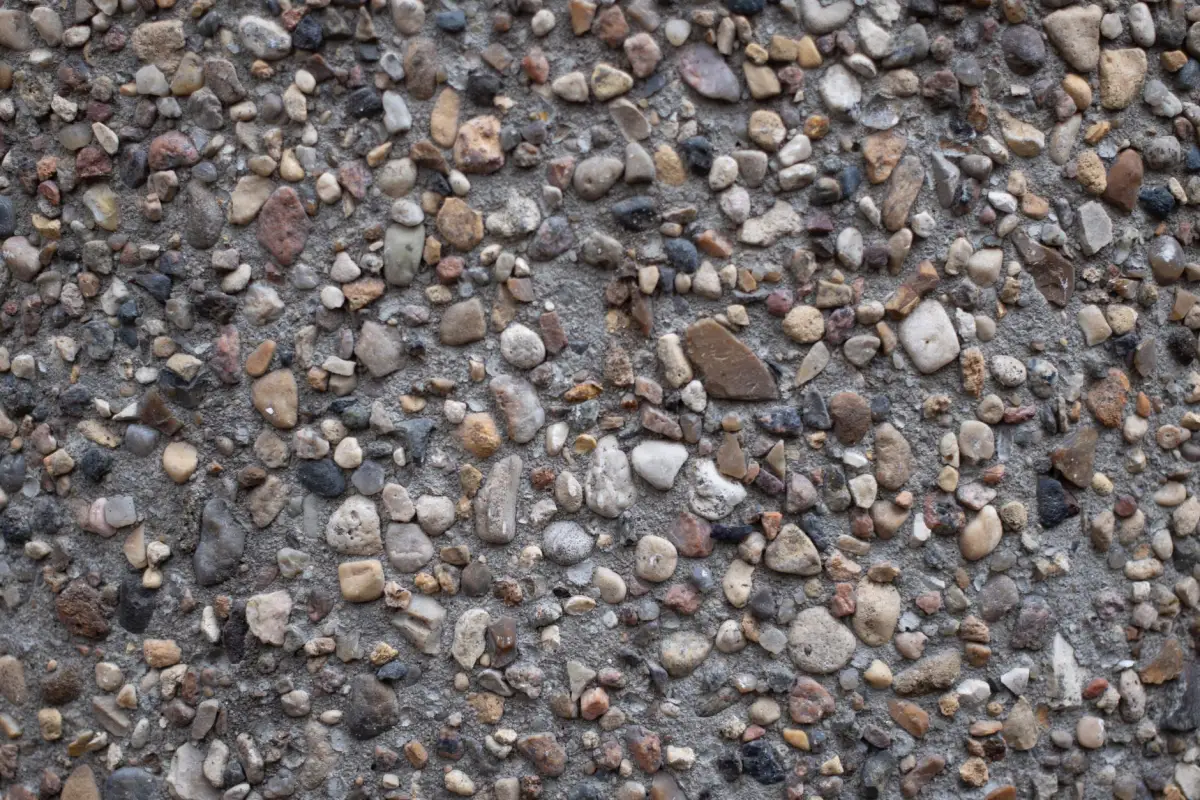
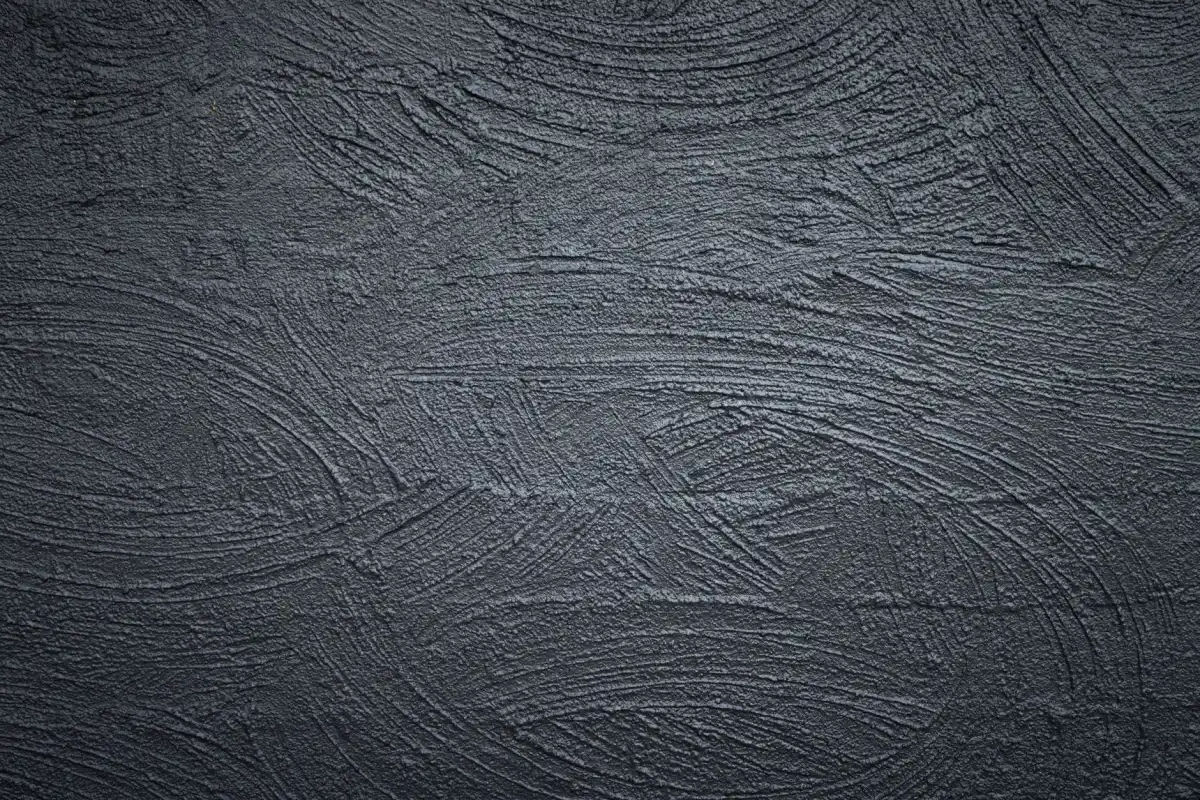
Texture is created while the concrete is being finished, and the options range from ordinary to genuinely distinctive. Broom finish is the workhorse and is not a compromise: it gives reliable traction on a surface that is wet or icy for months, and the direction and coarseness of the broom are both choices worth making deliberately. A swirl or fan finish uses a float to create overlapping arcs and gives more visual interest at similar cost and similar grip. A hard steel trowel finish produces a smooth, dense surface that belongs indoors and is a hazard outdoors here. Exposed aggregate sits at the other end, washing the surface paste back to reveal the stone, and it is one of the best-performing decorative finishes in this climate because the texture is structural rather than applied and does not depend on sealer to exist.
Decorative Concrete Patios
A patio is the surface people occupy rather than cross, which changes what is worth spending on. Integral color with a hand-tooled or saw-cut border defines the space at modest cost. Exposed aggregate in the field with a smooth colored border gives a strong contrast in texture rather than in color, and it stays comfortable underfoot while being genuinely slip-resistant. Colored bands dividing a large patio into sections turn the control joints the slab needs anyway into a deliberate layout. Where a patio adjoins a house of a particular period, and there are plenty of those around Elmwood Park and the older streets off Main Street, matching a color to the existing brick or stone usually reads better than choosing a color in isolation. Sealer is a maintenance commitment on any colored surface and should be priced in from the start.
Decorative Concrete Walkways
A front walk is short, highly visible and close to the viewer, which makes it the best value in decorative concrete on most properties. A modest area of exposed aggregate, a colored field with a contrasting broom-finished border, or a saw-cut pattern running the length of the walk all cost far less than treating a driveway or a large patio while doing more for the approach to the house. The overriding constraint is winter. A front walk is shoveled, it is walked on in freezing rain, and it is where de-icing chemicals get used most heavily on a residential property, so a finish with real texture and a sealer with a non-slip additive is the responsible specification. Where the private walk meets the public terrace panel, the decorative treatment stops at the property line and the municipal section stays standard.
Custom Concrete Patterns & Borders
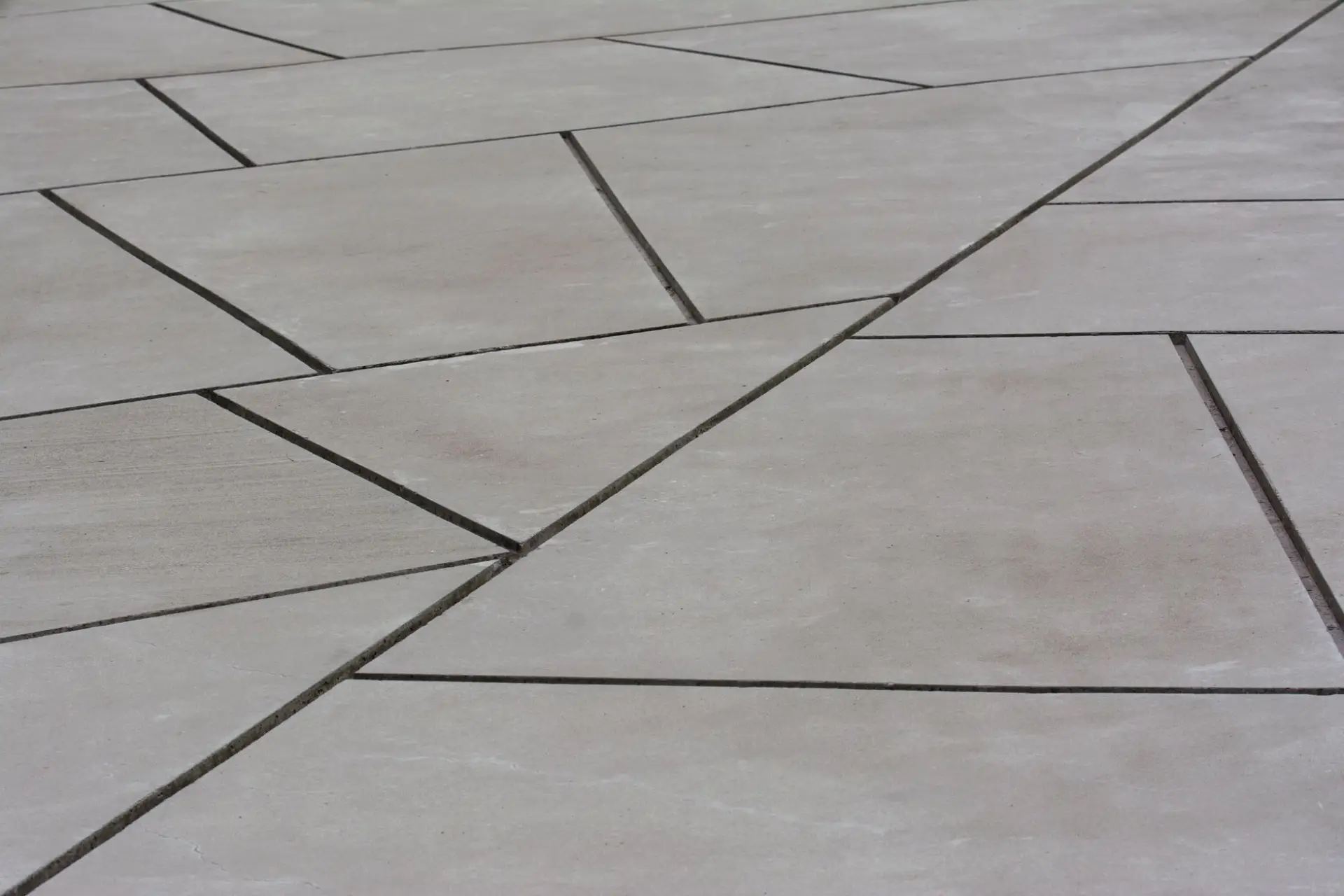
Pattern work without stamping is done with saw cuts, tooled joints and changes of finish, and it is a genuinely underrated approach. Every exterior slab needs control joints, so a saw-cut grid, a diagonal layout or a running-bond scoring pattern turns a structural requirement into a design element at nearly no additional material cost. Borders and bands are formed as part of the same pour, using a different color, a different texture, or both, to frame a field. Inlays and contrasting perimeter strips work the same way. This is also the technique that lets a large area get a decorative treatment on a realistic budget, since the field can stay a straightforward colored broom finish while the border and the cut pattern carry the design. The layout has to be drawn before the pour, because saw cuts are permanent.
Integral Color, Color Hardener and Stain: How Concrete Gets Its Color
Integral Color
Pigment batched into the concrete at the plant, coloring the full depth of the slab. The most forgiving option outdoors, because chips, wear and spalls still show color rather than exposing gray. The palette is more muted than surface methods, and the whole load has to be ordered colored, so it is a decision made before the truck leaves.
Color Hardener
A dry-shake material broadcast onto the fresh surface and troweled in. Produces stronger, more saturated color than integral alone and leaves a denser, more abrasion-resistant top layer. The color only goes as deep as the hardener penetrates, so a deep chip exposes the concrete beneath. Often used together with integral color for that reason.
Acid and Water-Based Stains
Applied to cured concrete, which makes them the only way to color a slab that already exists. Acid stains react chemically with the concrete and give a permanent, variegated, stone-like result in a limited earth-tone range. Water-based stains and dyes offer a wider palette but are generally less UV-stable outdoors, which matters on a south-facing patio.
What They All Share
Sealer. Every colored concrete surface depends on a maintained sealer to hold its depth and contrast, and de-icing salt shortens that cycle considerably. Budgeting for periodic resealing is part of buying color, not an optional extra, and a contractor who does not raise it is leaving out the ownership cost.
Signs You Need Decorative Concrete
- A new patio, walkway or driveway is already planned and the finish decision has not been made
- An existing slab is structurally sound but visually flat, and you want it to look intentional rather than utilitarian
- A decorative surface is wanted but a stamped pattern feels like more than the space calls for, or costs more than the budget allows
- A large area needs to look designed on a realistic budget, which is what borders and saw-cut patterns are for
- A previous colored surface has faded or lost contrast, which is usually a sealer problem rather than a concrete one
- The finish has to be genuinely slip-resistant because the surface gets used through Wisconsin winters
- A new slab needs to sit alongside existing brick, stone or an older colored surface and look deliberate next to it
How Decorative Concrete Works
- 1
Choosing a Finish That Suits the Use
The selection conversation starts with how the surface will be used rather than with what it should look like, because several attractive finishes are poor choices in this climate. A hard steel trowel finish is dense and handsome and dangerously slick outdoors when wet. A rock salt finish deliberately creates surface pits, and pits hold water that freezes and spalls the edges of each one, which makes it a bad fit anywhere with real freeze-thaw cycling. Exposed aggregate and broom finishes are grippy and forgiving. Once the shortlist is honest, color is chosen from physical samples viewed outdoors in daylight, ideally against the brick, siding or stone already on the property, since concrete color reads very differently on a monitor than on a slab. The joint and pattern layout is drawn at the same time, because saw cuts are permanent and should be part of the design rather than an afterthought.
- 2
Base, Forming and Mix Specification
A decorative finish changes nothing about what the slab needs underneath it, and this is where decorative projects most often go wrong: money moves to the surface and comes out of the base. Topsoil and organic material are stripped, the subgrade is compacted, and dense-graded base course goes in and is compacted in lifts. Thickness follows use, four inches for patios and walks and five to six where vehicles park. Forms are set to the finished elevation and slope, with flexible forming where the layout curves and separate forms where a border will be poured in a contrasting color or finish. If integral color is specified, it is ordered with the concrete rather than added on site, so the color decision has to be final before the truck is scheduled. Air entrainment is specified for any exterior slab here regardless of finish.
- 3
Placement and Surface Work
Concrete is placed, screeded and bull floated as it would be for any slab. What happens next depends entirely on the finish selected, and most of these techniques have a working window rather than a deadline. Color hardener is broadcast in stages and floated in while the surface is still receptive. Exposed aggregate is produced either by spraying a surface retarder and washing the paste back at the right moment, or by seeding aggregate into the fresh surface and working it in, and in both cases the timing of the wash determines how much stone shows. Broom, swirl and float textures are applied after bleed water has left the surface, which is the step most often rushed. Borders and bands in a contrasting finish are worked while the adjacent field is still plastic, so the two sections bond rather than sitting as separate pours.
- 4
Cutting, Sealing and Maintenance
Saw cuts go in within the first day, to roughly a quarter of the slab depth, and on decorative work they serve two purposes at once: relieving shrinkage and delivering the pattern. That is why the layout is drawn in advance and marked before cutting starts. Once the slab has cured sufficiently, sealer is applied, selected for the finish and the exposure, with a non-slip additive on anything walked on in winter. From that point the surface is a maintained one. Sealer comes back on a cycle, and the visible cue that it is due is color contrast starting to flatten out. De-icing salt is the main enemy of both the sealer and any surface-applied color, so sand for traction is the recommendation, and it matters more in the first winter than in any that follow.
What Does Decorative Concrete Cost in Racine, WI?
- Square footage and how much of it gets the decorative treatment versus a plain field with a treated border
- Color method: integral color, color hardener, both together, or stain applied to cured concrete
- Number of colors, since a single tone costs considerably less than a multi-color or antiqued treatment
- Finish technique, from a straightforward broom to exposed aggregate, which needs washing, timing and cleanup
- Complexity of the saw-cut or scored pattern and how much layout time it requires
- Borders, bands and inlays, each of which adds forming and a second finishing operation
- Slab thickness and base depth, which follow use and do not change because the finish is decorative
- Access for trucks, washing water and cleanup, particularly for exposed aggregate work in a backyard
- Sealer type, the non-slip additive, and whether a second coat is included at installation
- Whether the work is a new pour or a stain and seal treatment applied to an existing sound slab
Decorative concrete spans a wider price range than any other flatwork service, because the term covers a colored broom finish and a multi-color patterned field with contrasting borders equally. The most efficient version, and the one most people should look at first, is a plain field with a decorative border and a well-planned saw-cut pattern, which gets a large share of the visual effect for a small share of the cost. The thing to watch on any decorative estimate is that the structural line items have not quietly shrunk to fund the surface. Thickness and base depth do not become less important because the slab is going to be colored.
What to Look for in a Racine Decorative Concrete Contractor
Finish Chosen for the Climate
A contractor who steers away from slick trowel finishes and rock salt texture on exterior work in Wisconsin is applying local judgment rather than a catalog.
Samples Viewed Outdoors
Concrete color should be judged on site, in daylight, against the materials already on the property. A color chosen from a screen is a color chosen twice.
A Pattern Layout Drawn Before the Pour
Saw cuts are permanent and they double as control joints. The layout should be drawn and agreed in advance rather than improvised the next morning.
Structural Spec Unchanged
Thickness, base depth and reinforcement should be the same as they would be on a plain slab. If the decorative line items grew while those shrank, ask why.
Sealer Maintenance Explained
Colored and sealed surfaces are maintained finishes. The resealing cycle and the effect of de-icing salt belong in the conversation before the work, not in a follow-up call.
A Cheaper Option Offered
A contractor who suggests a plain field with a decorative border when that would serve the space just as well is telling you where the value is.
Residential & Commercial Decorative Concrete
Residential
Colored patios, exposed aggregate walkways, saw-cut driveway patterns, decorative borders, pool decks and entry landings for homes across Racine, Mount Pleasant, Caledonia, Sturtevant and Wind Point. Residential decorative work usually starts with matching the existing house materials, which is easier to get right with samples on site than with a color chart.
Commercial
Entry plazas, courtyard surfaces, decorative bands, colored walkways and patterned flatwork for retail, hospitality and multi-family properties. Commercial decorative work carries continuous foot traffic and a real slip-resistance obligation, so texture and sealer selection are specified rather than assumed, and maintenance intervals are set out at handover.
When Decorative Concrete Isn’t the Right Call
- If the surface gets heavy de-icing salt every winter, a colored, sealed finish is fighting the conditions. Exposed aggregate or a plain integrally colored broom finish holds up far better than anything depending on a surface layer.
- If nobody will reseal it, buy a finish that does not depend on sealer. Exposed aggregate and a broom texture still look intentional untreated; a stained or color-hardened surface does not.
- If the slab has already cracked and settled, decorative treatment is money spent on a surface that has a structural problem underneath it. Fix the slab first or replace it.
- If the priority is the lowest possible cost, a plain broom finish is not a failure. A decorative border and a saw-cut pattern on an otherwise plain slab is the next step up and costs a fraction of a fully treated field.
- If a stone or brick pattern pressed into the surface is what you actually want, that is stamped concrete and it has its own page. This page covers everything except stamping.
- Properties outside Racine, Kenosha, Milwaukee and Waukesha Counties fall outside the working area.
Frequently Asked Questions
- What is the difference between decorative concrete and stamped concrete?
- Stamped concrete is one technique within the decorative category: mats press a stone or brick pattern into the slab while it is still plastic. Decorative concrete more broadly covers how concrete is colored, how its surface texture is created, and how patterns are cut or formed rather than pressed. Exposed aggregate, integral color, saw-cut patterns and contrasting borders are all decorative and none of them involve stamping.
- Which decorative finish holds up best to Wisconsin winters?
- Exposed aggregate and integrally colored broom finishes. Both put the visual effect in the concrete itself rather than in a surface layer, so wear and chipping do not expose a different material underneath, and both give real traction when wet. Finishes that depend on a surface-applied color or a smooth sealed surface need more maintenance and are less forgiving of de-icing chemicals.
- Can existing concrete be colored?
- Yes, with stains or dyes applied to the cured slab. Acid stains react chemically with the concrete and give a permanent, variegated result in a limited earth-tone palette. Water-based stains offer more colors but are generally less UV-stable outdoors. The slab has to be clean, free of old sealer and structurally sound, and the result will follow the existing surface texture rather than change it.
- Is a rock salt finish a good idea here?
- Generally no. A rock salt finish creates small pits in the surface by pressing salt into the fresh concrete and washing it out. Those pits hold water, and water that freezes in a pit spalls its edges, so the finish degrades faster in a freeze-thaw climate than it does in a warm one. It is popular in southern states for good reason and travels poorly to Wisconsin.
- How much more does decorative concrete cost than plain concrete?
- It depends enormously on which treatment, which is why the honest answer is a range rather than a multiplier. A saw-cut pattern on an otherwise plain slab adds very little. Integral color adds a material cost across the whole pour. Exposed aggregate adds timing-sensitive labor and cleanup. A multi-color field with formed contrasting borders is a different project altogether. The cheapest meaningful step up is usually a plain field with a decorative border.
- Does decorative concrete need to be sealed?
- Colored and stained surfaces do, and they need it reapplied on a cycle rather than once, because the sealer is what holds the depth and contrast of the color. Exposed aggregate and plain broom finishes benefit from sealing but do not depend on it to look right. On any walking surface used in winter, the sealer should include a non-slip additive, since a sealed surface is slicker when wet than an unsealed one.
Learn More
- American Society of Concrete Contractors — Its Decorative Concrete Council publishes practice guidance on coloring methods, surface finishes and sealer selection.
- Portland Cement Association — Background on concrete durability, surface finishing and how freeze-thaw exposure affects exterior slabs.
- National Ready Mixed Concrete Association — Technical resources on integrally colored ready-mixed concrete, batching consistency and air entrainment.
Need Decorative Concrete in Racine, WI?
Tell us what’s going on and get an on-site estimate — no charge for the visit, and no obligation to book the work.
Get My Free Estimate